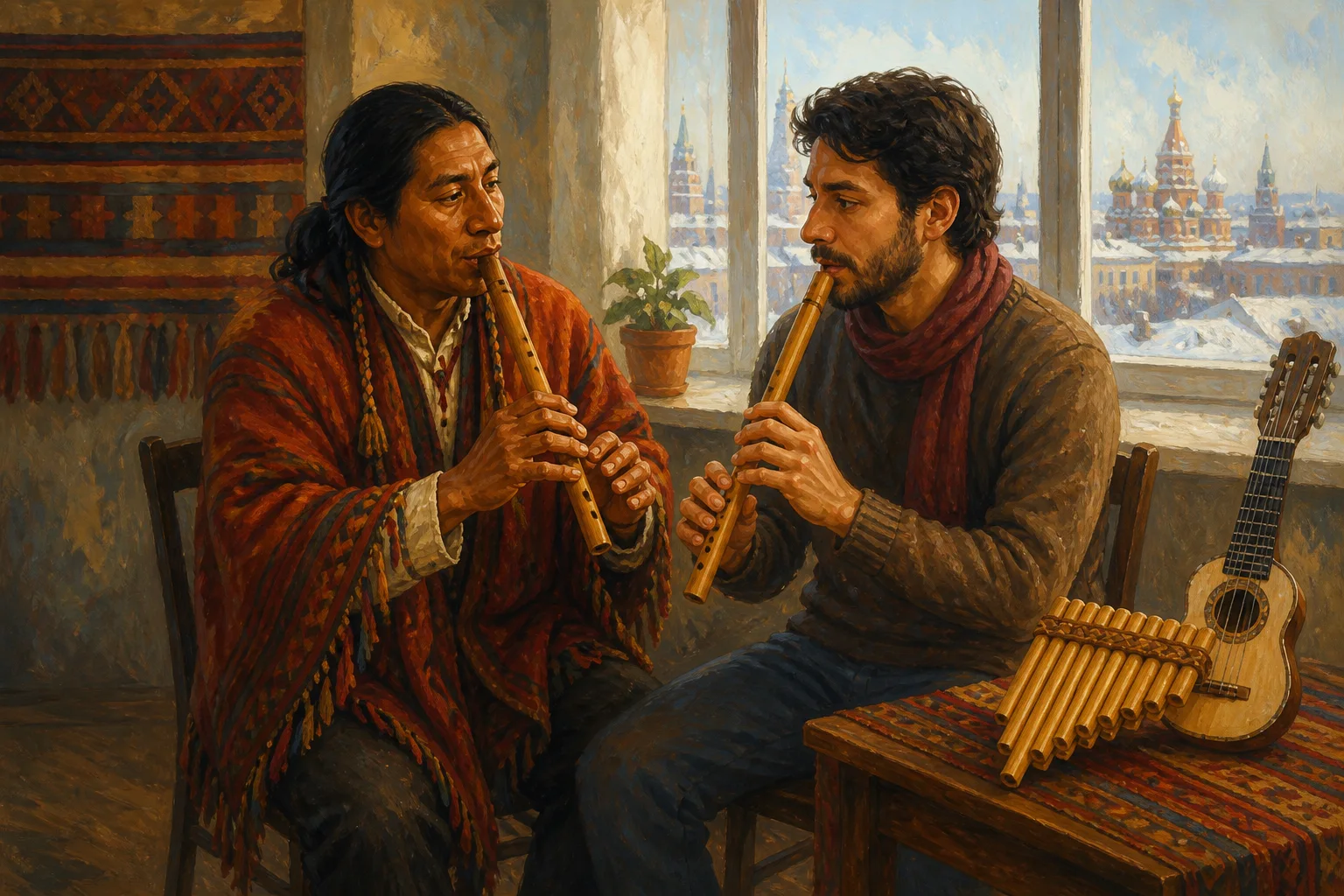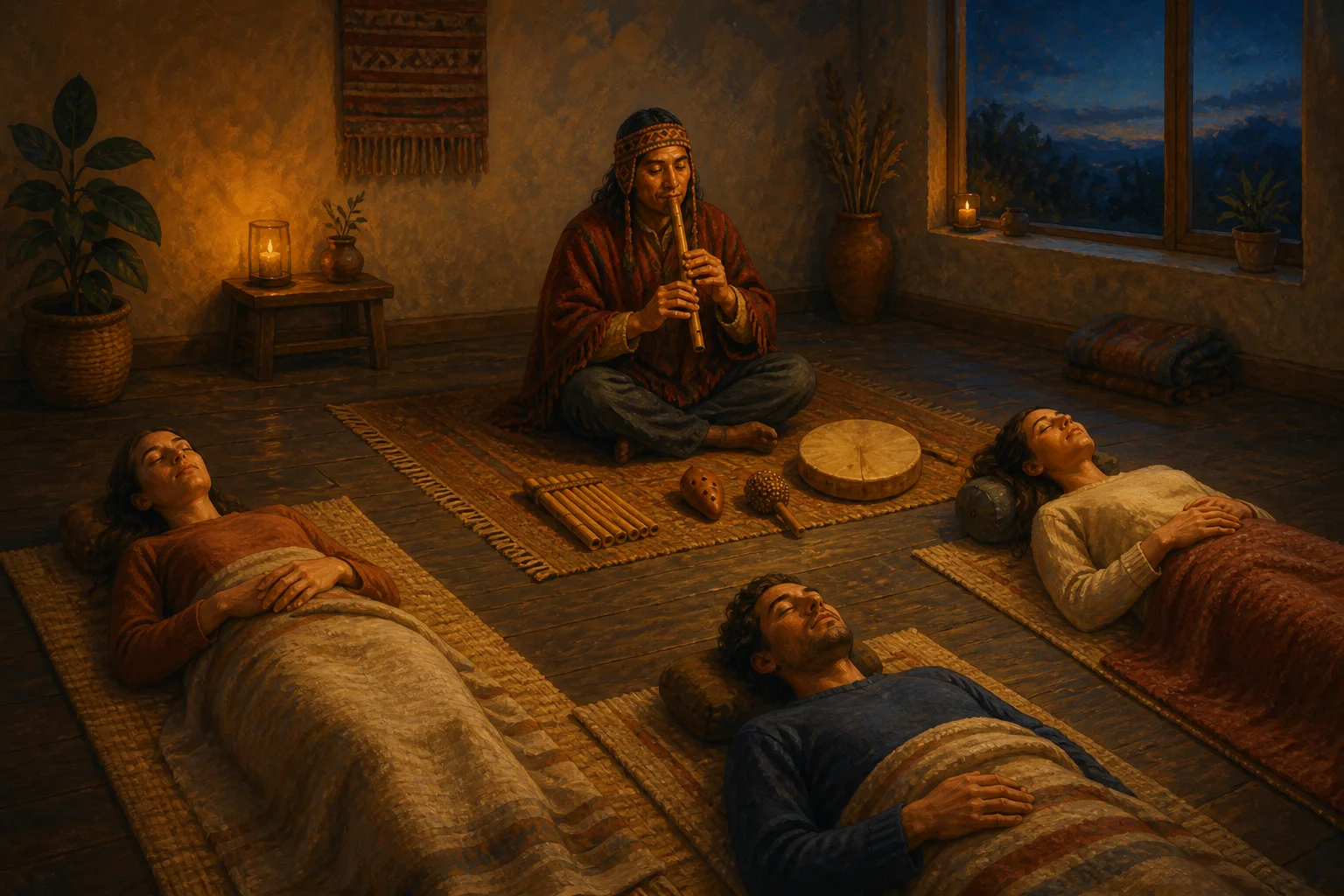
In the Robert Mamani approach, Sound Healing means creating a space for listening and relaxation through music, breathing and acoustic instruments. There is no mandatory experience or promise of healing: each person arrives with their own condition and responds differently.
Important: This practice is aimed at relaxation and listening. It is not a substitute for medical, psychological or professional treatment.
Sound to slow down
Robert describes Sound Healing as music used to help calm the mind and reduce the feeling of everyday burden. When a person settles, breathes, and stops anticipating the next task, the body can enter a more attentive state of rest.
The English word has spread internationally, but the idea of accompanying contemplative practices with sound appears in diverse cultures. Robert relates it to his experience as an Andean musician and to the contemporary use of flutes, percussions, natural sounds and silences.
The instruments of the meeting
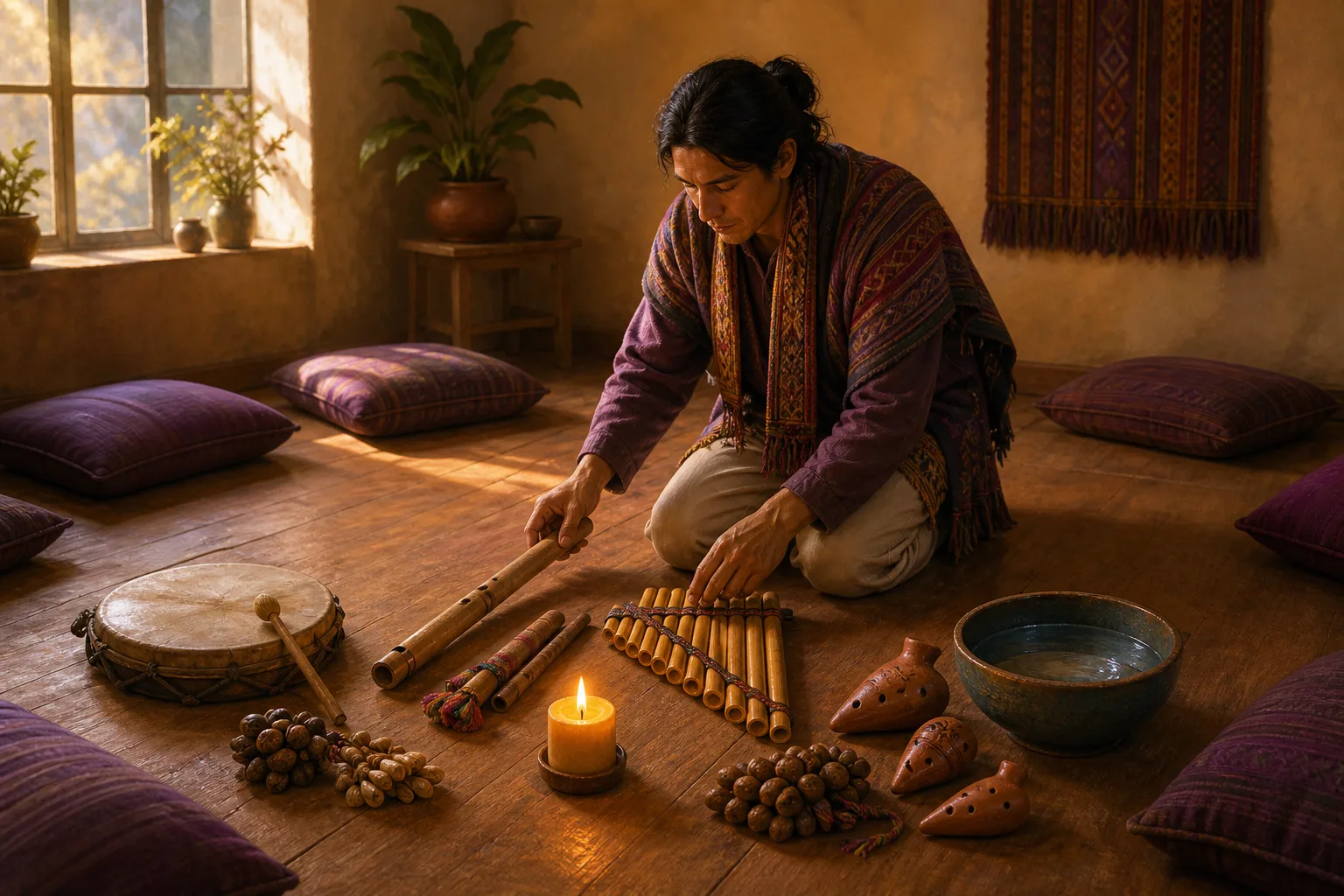
In your sessions you can use quenas, quenachos, panpipes, Native American flute, ocarinas, whistles, rattles and different percussions. Each instrument fulfills a timbral function. A flute opens a long line; a rattle introduces movement; an ocarina can evoke the song of a bird; a drum organizes the pulse.
Robert also values the sounds of water, rain, river, sea or birds. In his practice he prefers that the sound retain an organic quality and that the attention remains on listening, not on a constant technical explanation.
Before the first note
The match does not start by playing. First Robert welcomes the people, talks to them and explains what is going to happen. Each participant can sit or lie down depending on what is comfortable and safe in the space.
Robert proposes arriving with an intention: to rest, observe an emotion, find clarity in the face of a question or simply allow yourself some time of silence. The intention guides attention, but does not require obtaining a specific response.
“In a meditation many things can happen or nothing can happen. "Every person has a different vibration."
A gradual journey
The first phase usually relies on words and breathing. Then soft sounds appear. Robert incorporates new instruments little by little so that the listening gains depth without becoming a shock. In a group format, the entire tour can last around an hour and a half; The exact duration is confirmed for each meeting.
There is no identical score for all sessions. The musician observes the environment, listens to the group's response and decides when to maintain a texture, introduce another voice or leave space for silence.
Different experiences, without promises
Some people report feeling lighter or more rested. Others describe images, memories or the feeling of having traveled internally. There are participants who interpret these experiences in spiritual terms; others understand them as imagination, memory or deep relaxation.
Robert listens to these stories without imposing a single reading. They are subjective experiences. They do not prove that music cures a disease nor do they allow us to anticipate what another person will feel. The value of the meeting is also in being able to observe and share what was experienced with respect.
The return and the conversation
Closure takes time. After the last sound, the group gradually returns to everyday attention. Whoever wishes can tell what they perceived, what they let out, or what question remains open. Listening to the experiences of others broadens your understanding of how different responses to the same music can be.
Robert recommends not booking immediately after a demanding activity. Drinking water, walking calmly and maintaining a few minutes of silence helps complete the transition.
Five minutes of listening at home
It is not always possible to attend a meeting. Robert proposes a simple practice: find five minutes, turn off distractions, choose calm music and breathe without forcing. There is no need to pursue an extraordinary state. Just notice the air, the body and the sound.
Brief practice does not replace support when a person needs professional help. Its function is more modest and, precisely for that reason, accessible: remembering that even on a day full of noise we can create a small space to listen.
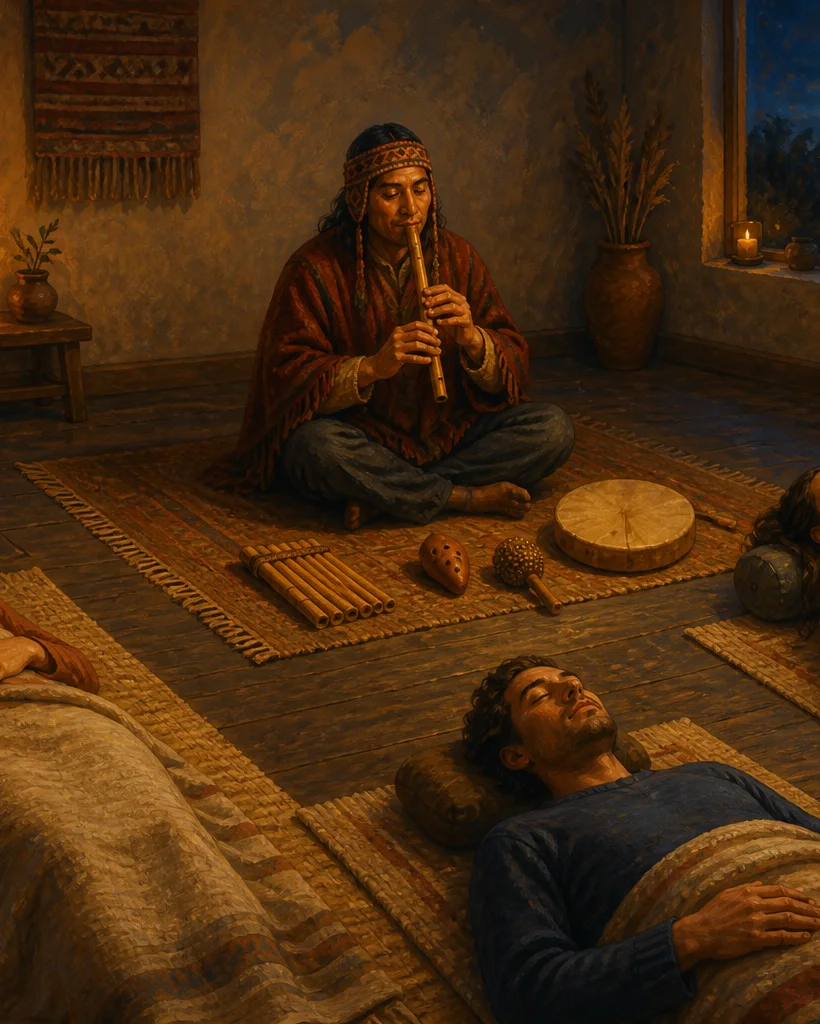
Robert Mamani
Peruvian musician, performer and teacher of Andean instruments, creator of the Hawk Spirit project.