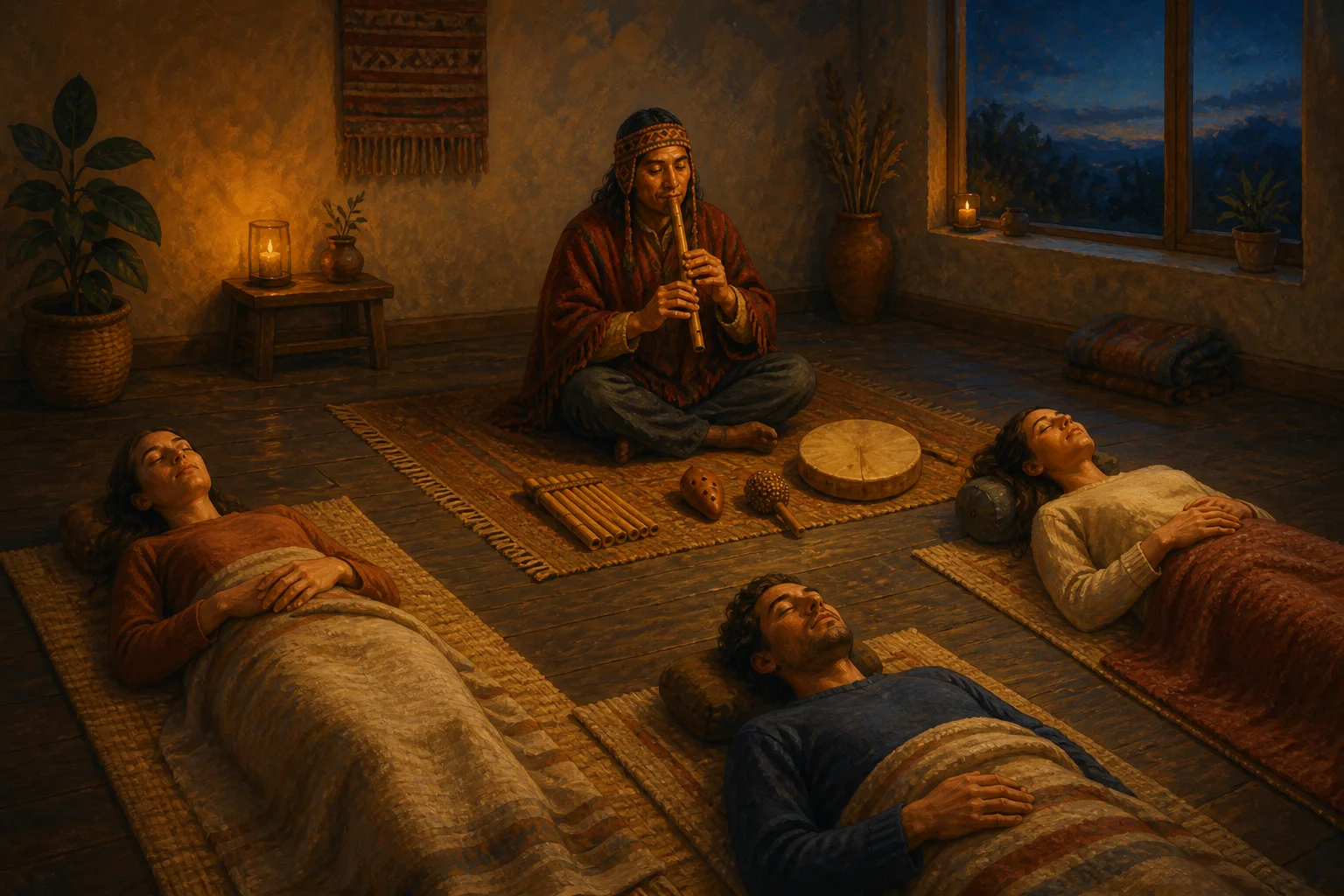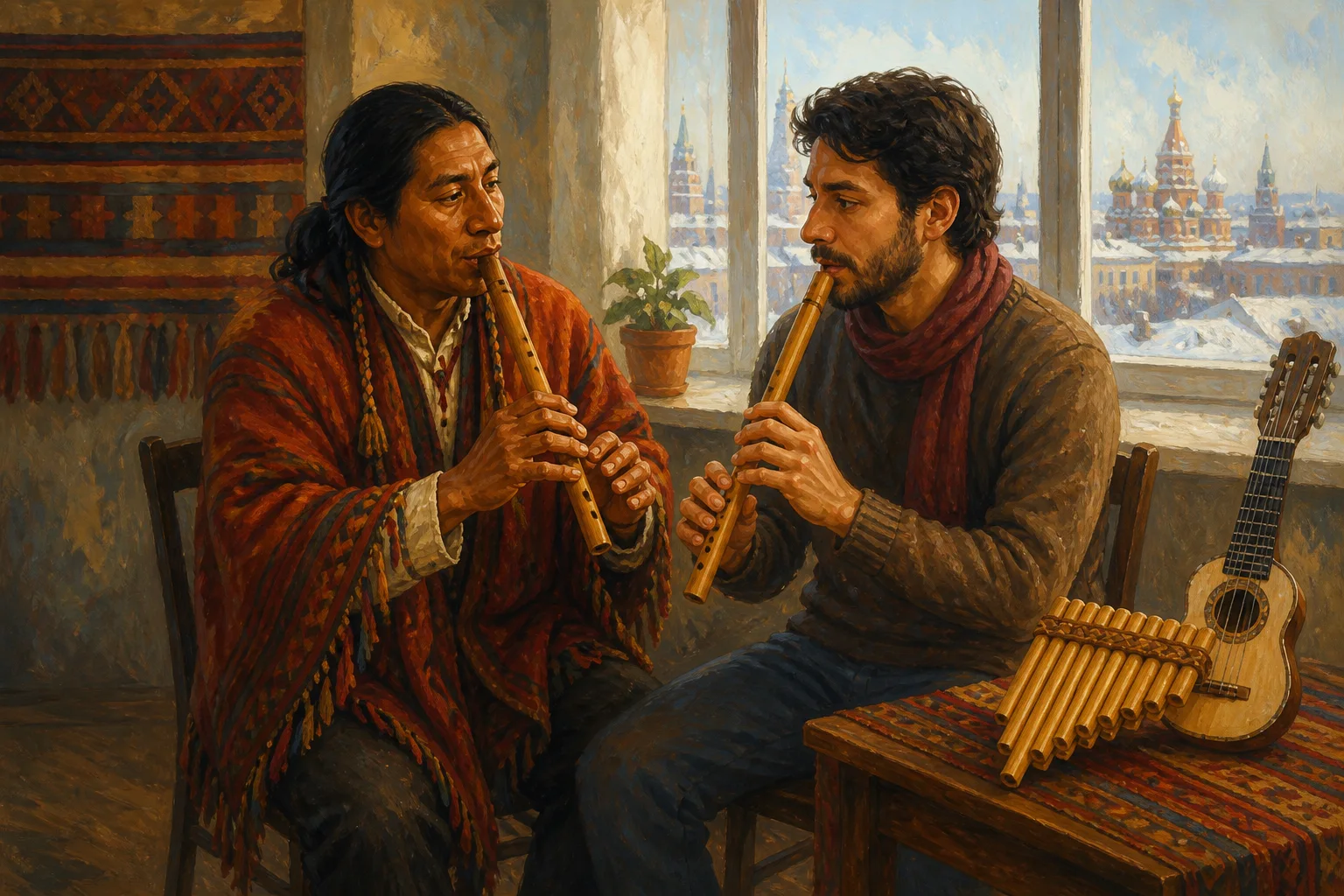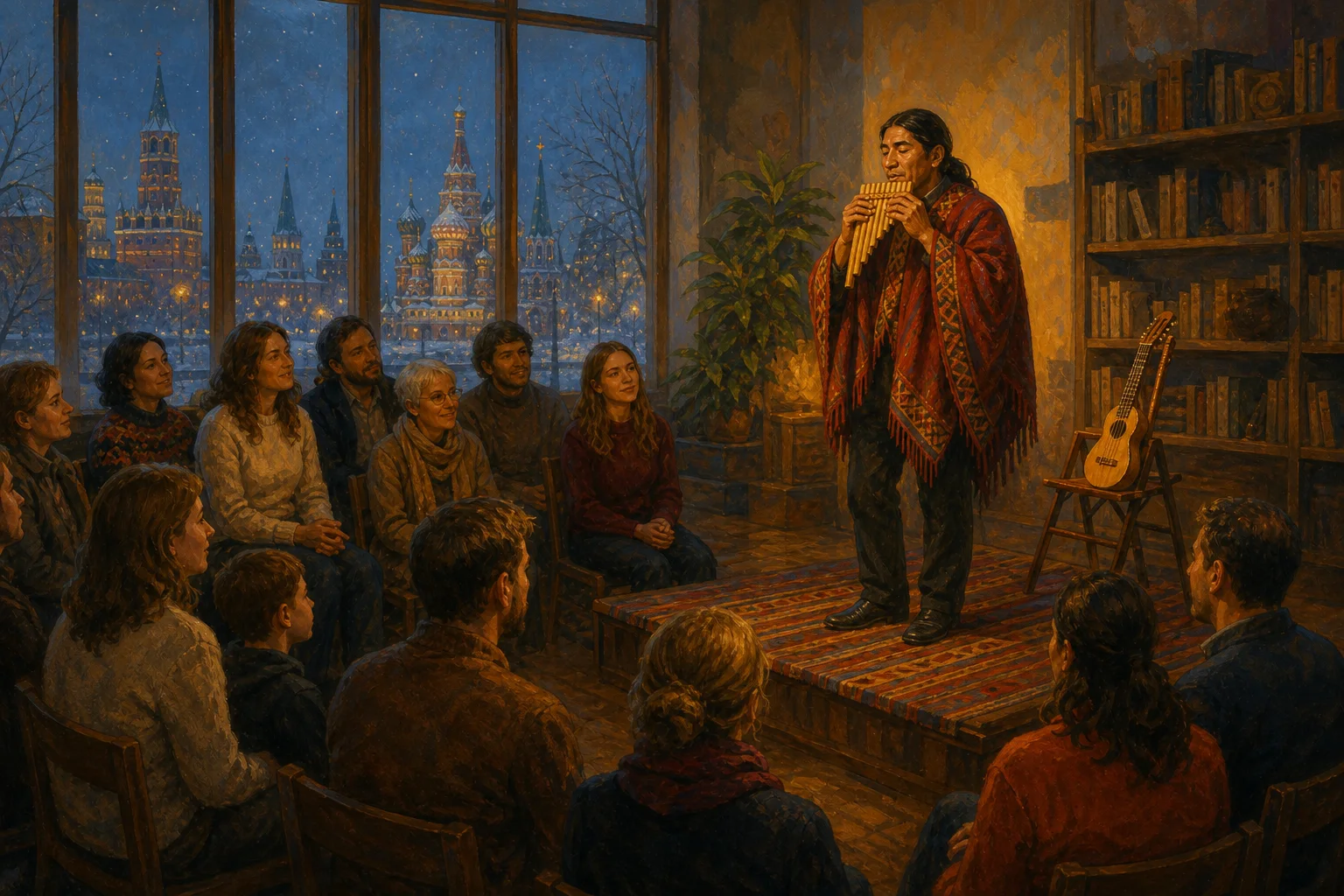
Music born on the other side of the world can find listening in a Moscow room. Robert Mamani has proven this in very different spaces: intimate gatherings, cultural centers, programs for veterans and charity concerts.
Each space proposes another listening
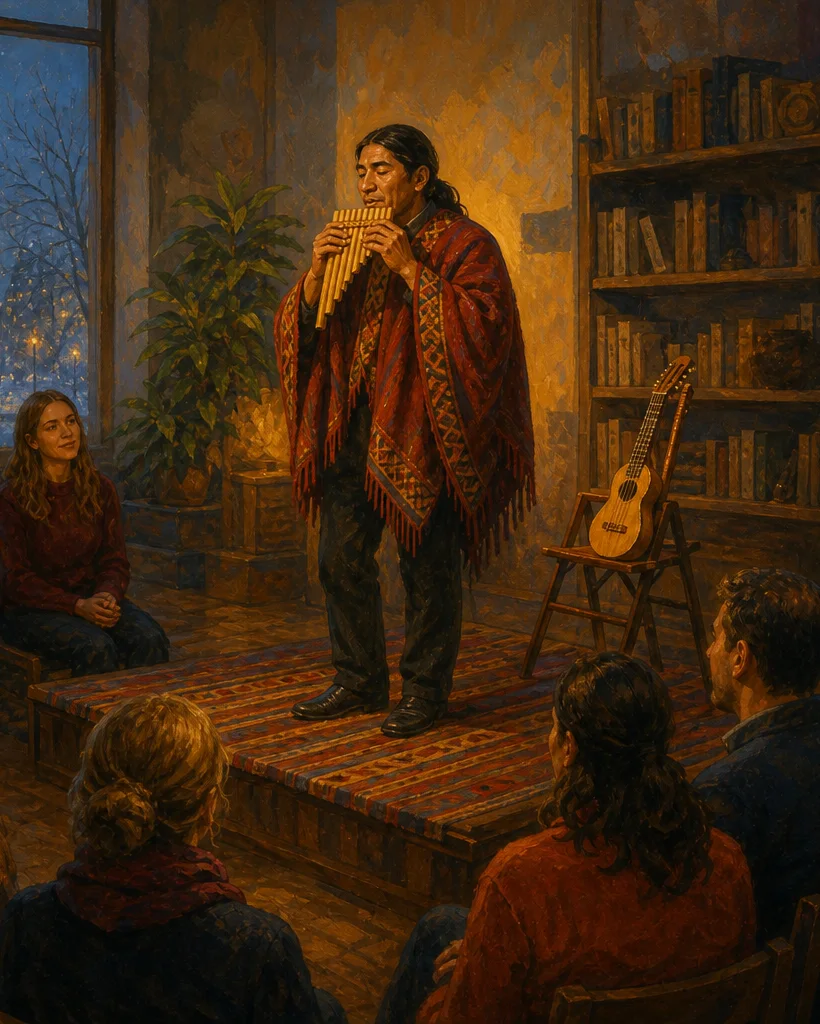
During his years in Russia, Robert has played to very different audiences. He doesn't only remember great scenarios. He is especially interested in places where music can coexist with conversation: a tea club, a library, a break room or a center dedicated to culture.
At a tea club he met people who had come to talk and take a break. They listened carefully and, after the music, asked questions. The concert stopped being a succession of pieces and became a meeting. For Robert, that possibility of talking to the audience is part of the value of a performance.
When questions become part of the concert
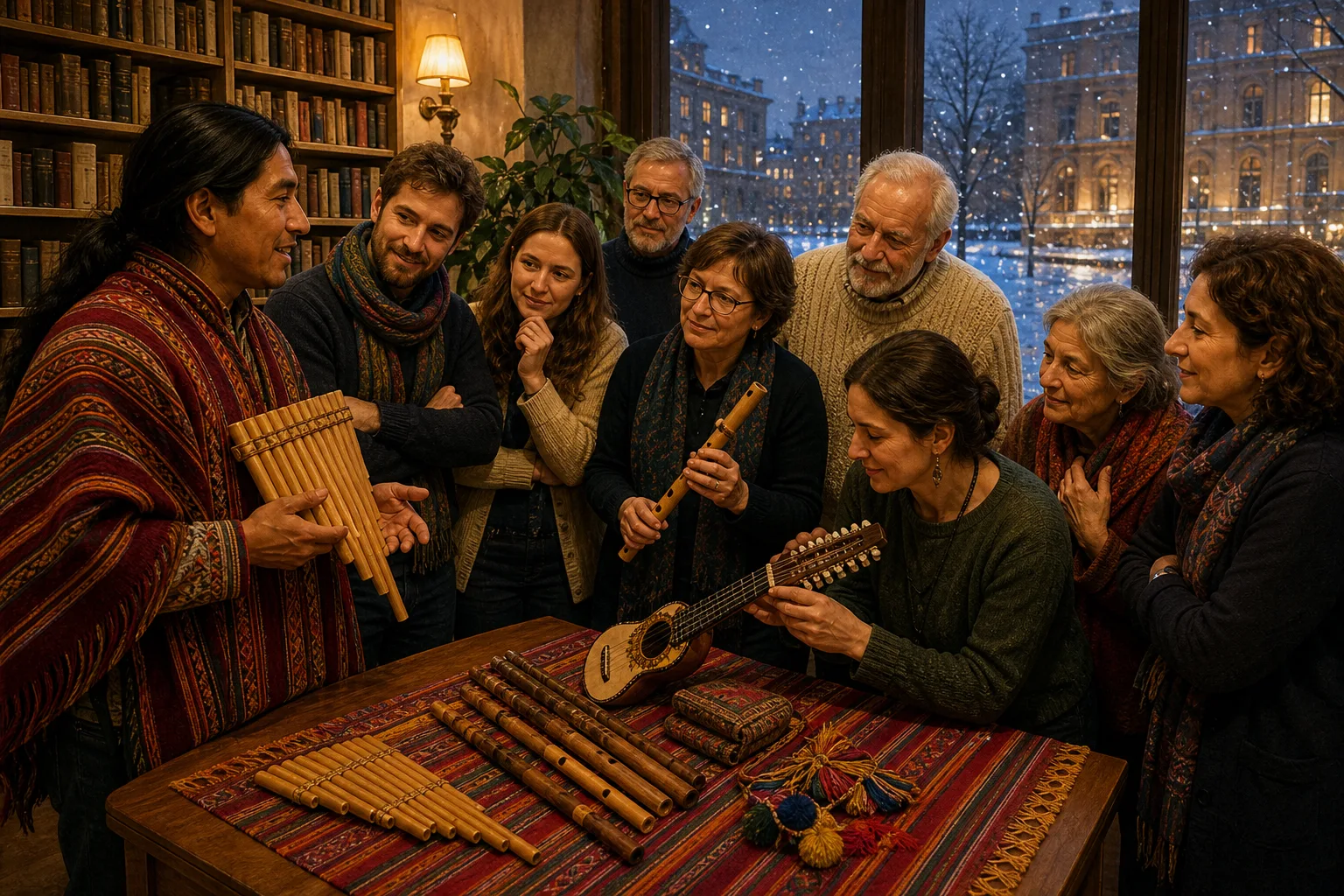
Andean instruments arouse curiosity. How is sound produced? What material is a quena made of? Does the zampoña belong to Peru or a broader region? When the place allows you to stop, Robert does not need to rigidly separate concert and explanation.
A melody opens attention; a story provides context; another melody allows you to listen again with a different perception. This format works especially well in libraries, museums, clubs and spaces where the public wants to learn about other cultures.
Music for seniors and veterans
Robert remembers with special respect a project in Moscow aimed at seniors and veterans. For a season he performed approximately once a month in different places. There he represented “deep Peru” through the instruments and repertoire that have accompanied him since his youth.
The expression does not mean turning a culture into a postcard. It means presenting it carefully, letting the instruments speak and explaining where the music comes from. Although Robert feels close to a human identity broader than any nationality, he recognizes his Peruvian origin and assumes the responsibility of representing it with respect.
“I play with love and with the spirit, no matter where I am. In that moment we become one with the public."
Three ways to organize a performance
In your experience, invitations have been organized in several ways. Sometimes the venue sells tickets and the musician receives a percentage. Other times a specific amount for the performance is agreed upon in advance. There are also free or charity concerts, especially in projects for children, seniors or communities that need support.
There is no valid formula for all cases. The format depends on the organizer, budget, duration, travel and technical conditions. The important thing is to talk about it clearly before the event and understand what each party brings to the table.
The distance disappears during a melody
The audiences in Russia does not need to know the repertoire in advance to respond to it. It may begin with surprise at the sound of a panpipe and end up recognizing an emotion of its own. Robert summarizes that experience by saying that the listener's soul has no nationality.
Music does not erase cultural differences; allows you to approach them without fear. For a few minutes, a Moscow room and a memory of the Andes can occupy the same space. That coincidence is, for Robert, the true center of the concert.
Robert Mamani
Peruvian musician, performer and teacher of Andean instruments, creator of the Hawk Spirit project.