The instruments that Robert Mamani plays do not entirely fit within a national border. Its forms travel through the Andes, changing name and size, and preserving stories in which air, wood, clay and the memory of the people become music.
Andean before national
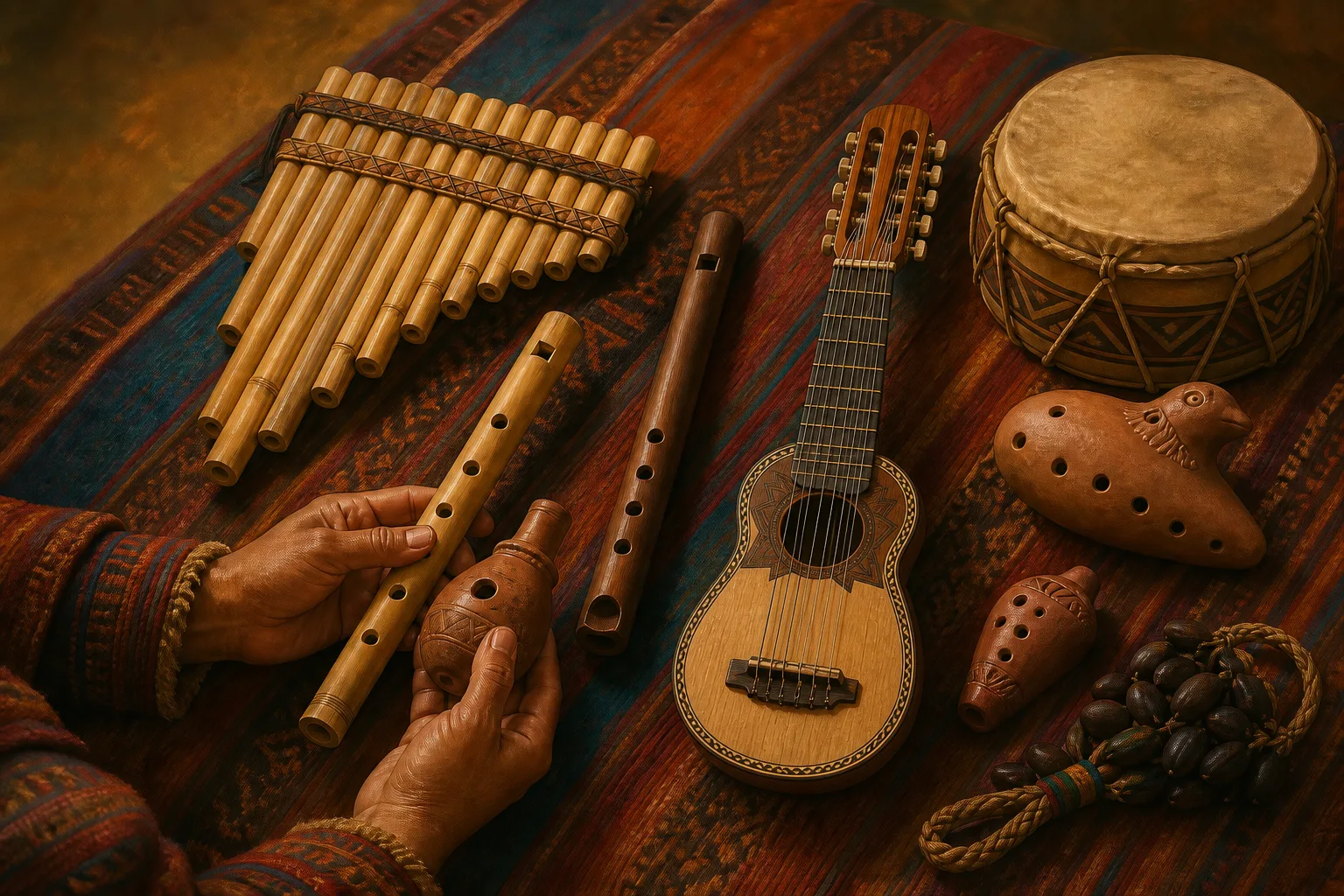
Robert usually begins with an important clarification: the zampoña, the quena or the charango do not simply belong to a single country. They are present, with variants and discussions of origin, in different regions of Peru, Bolivia, Ecuador, Chile, Argentina and other territories connected by the mountain range.
call them andean instruments It allows us to recognize this shared geography without erasing local particularities. Each town preserves its own repertoires, tunings, ways of building and occasions of use. The common name opens the conversation; it doesn't finish it.
The zampoña: an architecture for the air
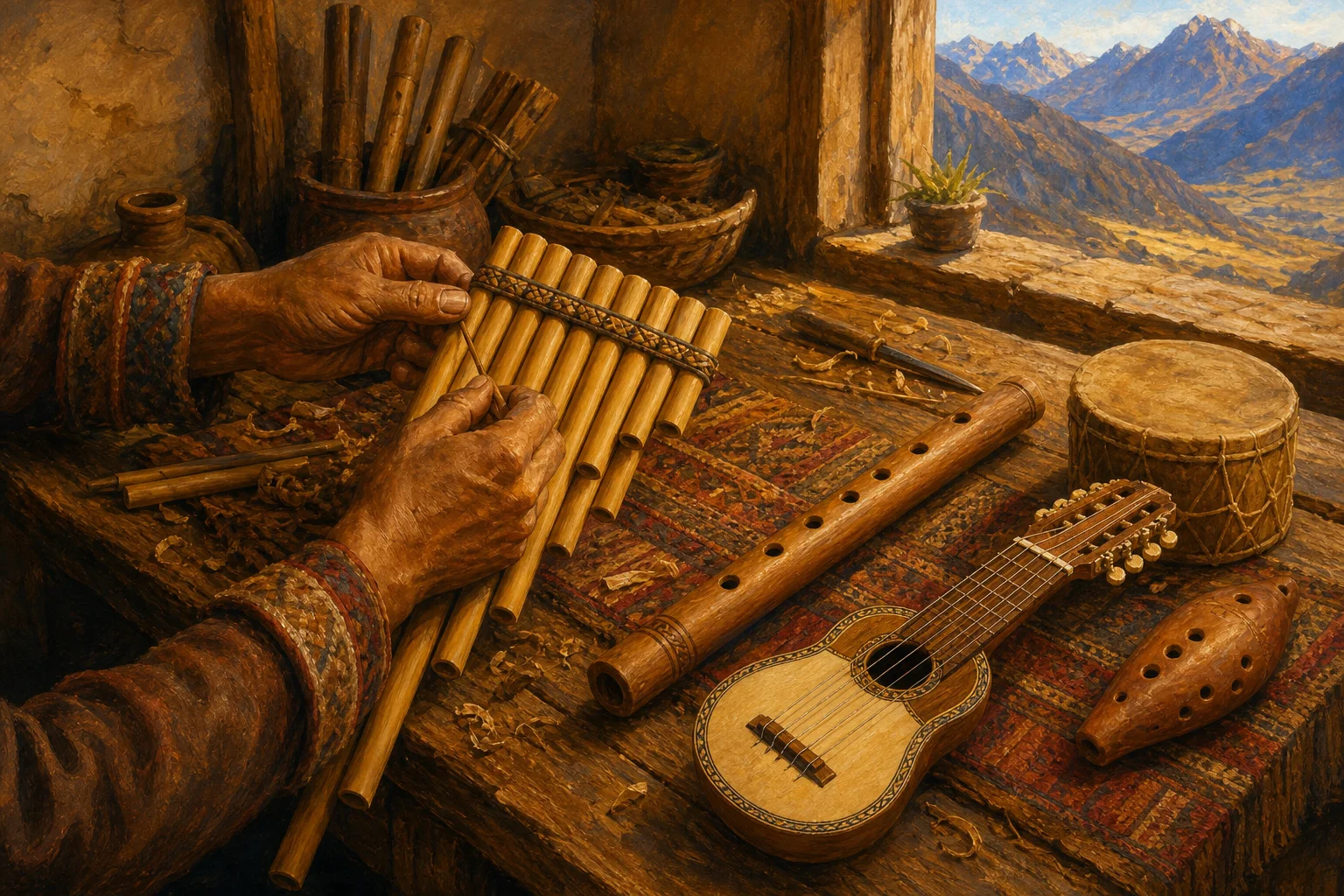
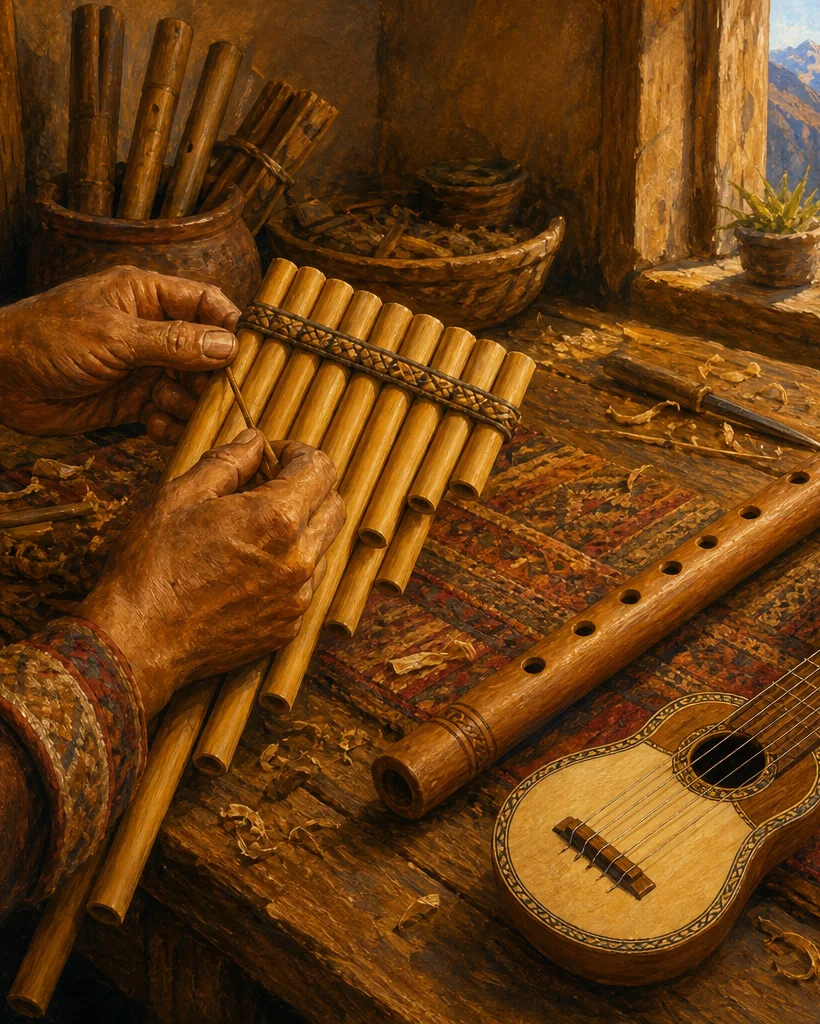
The panpipe is made up of tubes of different lengths. The musician directs the air towards the edge of each tube and moves the instrument to build the melody. It seems like a simple gesture, but it requires precision: a small variation in the angle completely changes the attack and cleanliness of the sound.
Robert remembers that the name is also used antara in historical and regional contexts. In his story, ancient clay instruments found on the Peruvian coast and a tradition much older than the Inca world appear. The essential thing for him is not to set a single date, but to understand that the Pan flutes are part of an extensive pre-Hispanic memory.
There are panpipes of various registers and sizes: maltas, bastos, toyos and grandes mamatoyos, among other names. As the length of the tubes increases, the sound descends and gains depth. In a set, these voices can be distributed as records of the same family.
Quena and quenacho: the sound is born in an open edge
The quena is a vertical flute with an open mouthpiece. It does not have a duct that automatically directs the air: the performer must find the edge with his own airstream. That is why the first sound may require patience, but also why the embouchure offers great expressive richness.
Currently it is frequently constructed of bamboo or wood. Robert remembers stories about ancient specimens made with clay, bone and other materials available in each community. The instrument thus reveals a simple idea: music is built with what the territory offers.
The quenacho belongs to the same family, but is older and has a more serious record. Your sound may feel darker and deeper. Choosing between quena and quenacho is not choosing a “better” version, but rather deciding which voice the music needs.
Ocarinas, whistles and sounds of nature
Ocarinas and small whistles also appear in Robert's collection. Some imitate birds, water or animal calls; others create textures that are integrated into concerts and listening practices. These sounds recall the link that chroniclers and oral traditions have pointed out between music and nature.
It is not about literally copying a landscape. The instrument transforms that observation into human language. Water inspires movement; a bird suggests a call; Breath becomes organized wind.
The charango: ten strings and many stories
The charango is small, bright and capable of sustaining both rhythm and melody. The most widespread form uses five double orders: ten strings in total. Its record continues, in some way, where the guitar begins to abandon its low notes.
Peru and Bolivia maintain different debates and versions about his birth. Robert tells a theory according to which it emerged as an indigenous response—even as satire—to the guitar brought by the Spanish. It also tells a popular legend about a lost young man and an armadillo that sacrifices his body to save him. In gratitude, the young man turns the shell into an instrument.
The legend is not intended to function as a technical document. It speaks of gratitude, loss and transformation. Historically, armadillo shells were used in some charangos; Today instruments made entirely of wood are common.
"I like to feel the instruments, listen to them and connect with the sound they provide."
The instrument is not a silent object
For Robert, knowing an instrument means more than just memorizing data. You have to hold it, discover how it responds and listen to what it demands from the body. A panpipe commands lateral movement; a quena forces the air to refine; a charango coordinates both hands and turns the pulse into texture.
It is also useful to know its context. The same instruments can accompany parties, ceremonies, stage repertoires or contemporary gatherings. The tradition remains alive precisely because it is not frozen: it passes from one person to another, changes space and sounds again.
Robert Mamani
Peruvian musician, performer and teacher of Andean instruments, creator of the Hawk Spirit project.