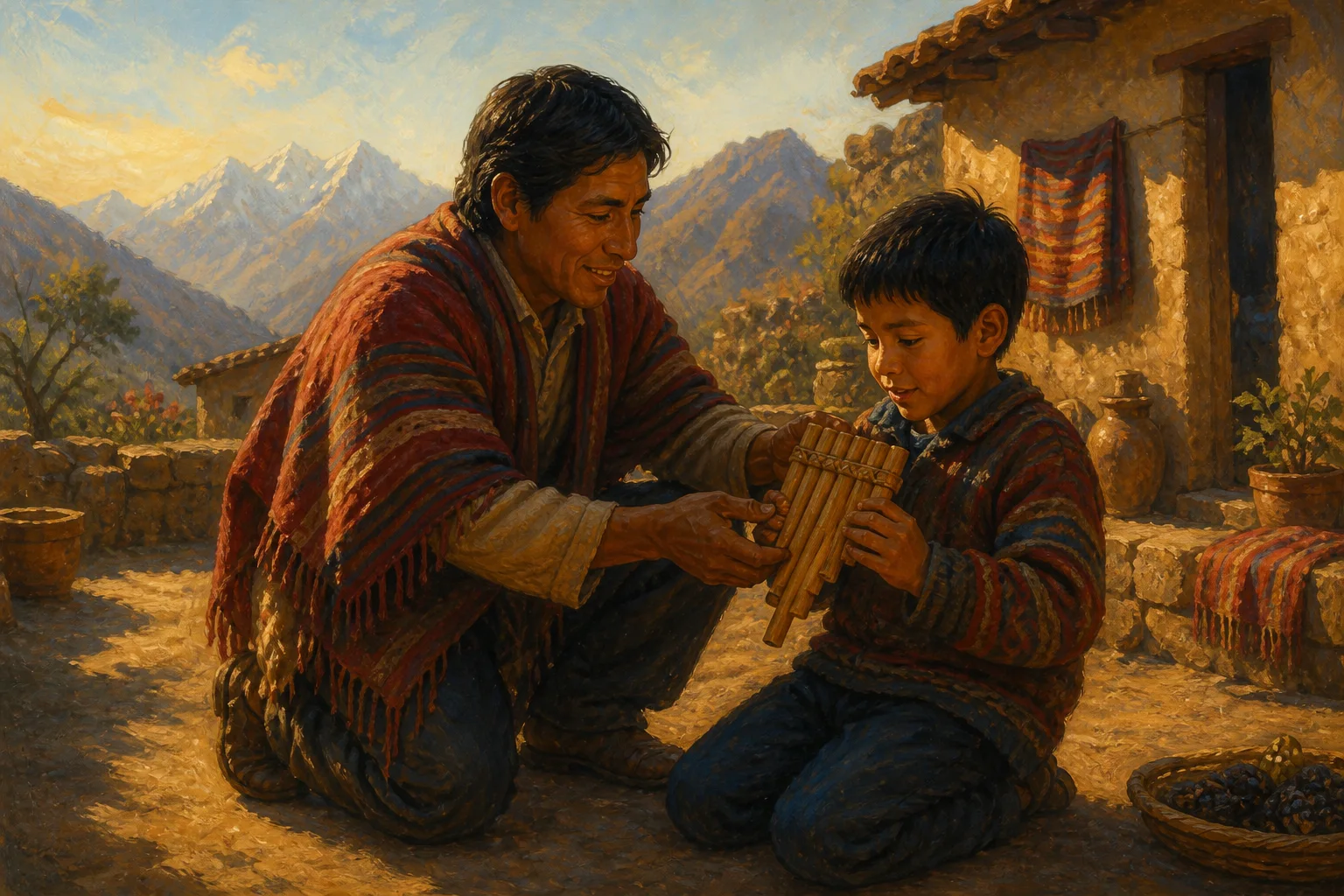
For Robert Mamani, the music does not start on stage or end when the last note fades out. It begins with the willingness to listen and continues with what a person takes with them: calm, closeness, a new question or the feeling of not being alone.
A music for each person
“The music I make helps people relax and open their hearts,” says Robert. In his way of understanding sound, opening the heart is not a mysterious formula. It means leaving everyday tension for a moment, listening carefully and recovering the ability to feel what is happening inside and around you.
Not all people respond in the same way. A melody that offers calm to someone can awaken energy, memory or desire for movement in another person. That's why Robert doesn't divide music into “good” and “bad” genres. Indigenous music, folklore, rock or a popular song fulfill different functions because those who listen are also different.
“Music is to help, guide and unite. With music we can be one.”
Interpretation as delivery
When Robert plays, he tries not to just play a series of notes. It speaks of surrendering completely to the instrument and allowing the vibration to arise from your inner state. Technique is still necessary: there is breathing, tuning, rhythm and many hours of practice. But technique becomes a means and not the final destination.
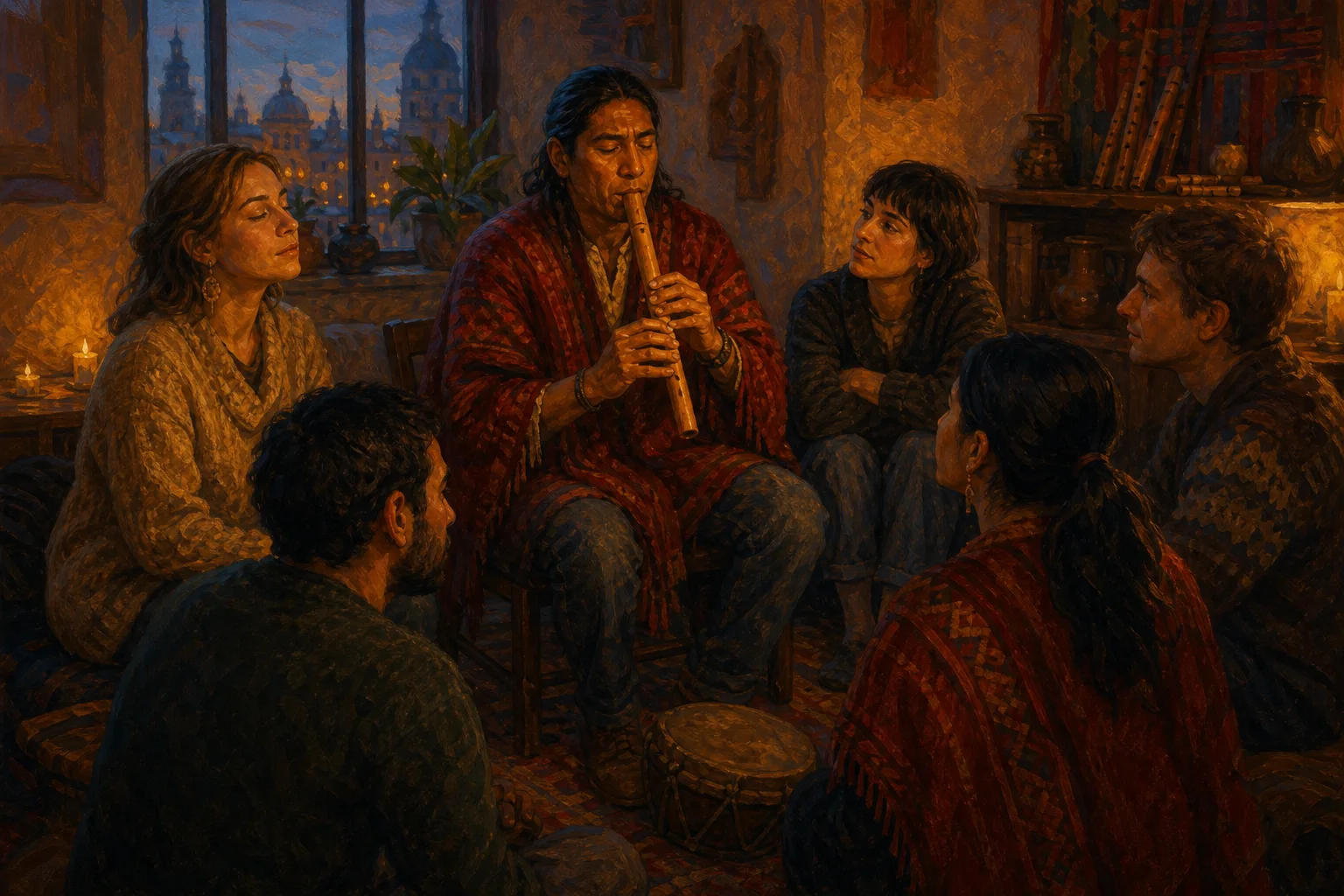
At a concert something happens that cannot be exactly repeated. The performer listens to the audience; the audience listens to the performer; space, silence and attention modify the music. Robert describes that moment as a circle: different people who for a few minutes participate in the same current.
A language that appears in many cultures
Robert observes that percussion accompanies towns very far from each other. Drums, bass drums and rattles have marked the pace of celebrations, ceremonies and collective work. In the Andes, the quenas, panpipes and other wind instruments dialogue with that pulse; In other regions different materials, names and forms appear, but the human need to organize sound persists.
Traditional music doesn't just belong to entertainment either. There is music for planting and harvesting, for patron saint festivities, carnivals, community gatherings and ceremonial moments. Each one places the person within a shared time. He doesn't just say “listen to me”; It also says “remember where you are and who you are with.”
Sound, nature and memory
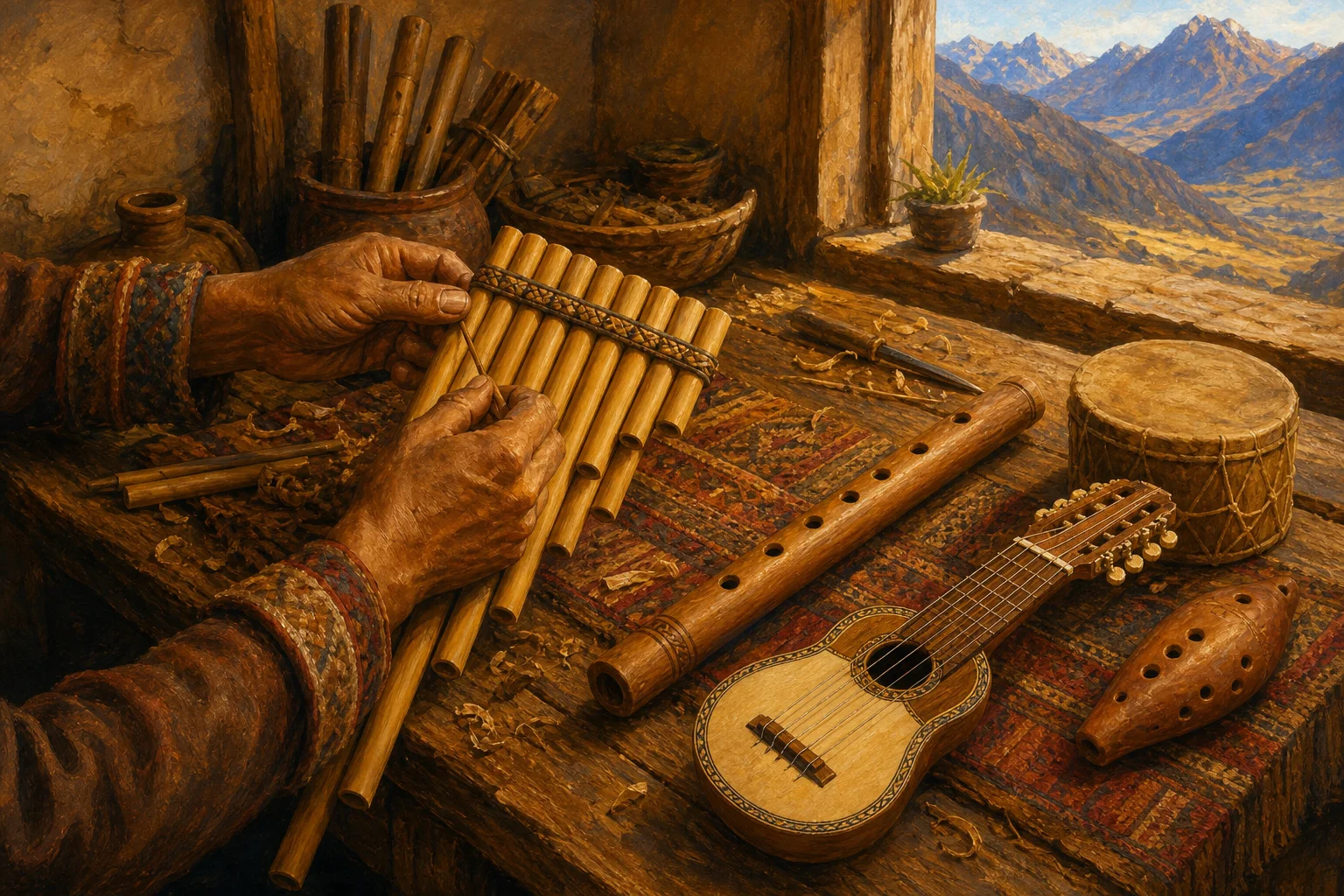
The instruments that Robert plays retain a visible relationship with matter: bamboo, wood, clay, seeds, skin and air. This closeness means that the musician cannot forget the physical origin of the sound. A flute exists because someone chose a material, opened its holes, listened to its response, and learned to breathe with it.
For Robert, this relationship allows the music to remember something prior to current borders. Peoples have their own stories and should not be confused with each other, but the act of converting breath and pulse into music creates an understandable bridge even when the language is not shared.
What does “heal” mean here?
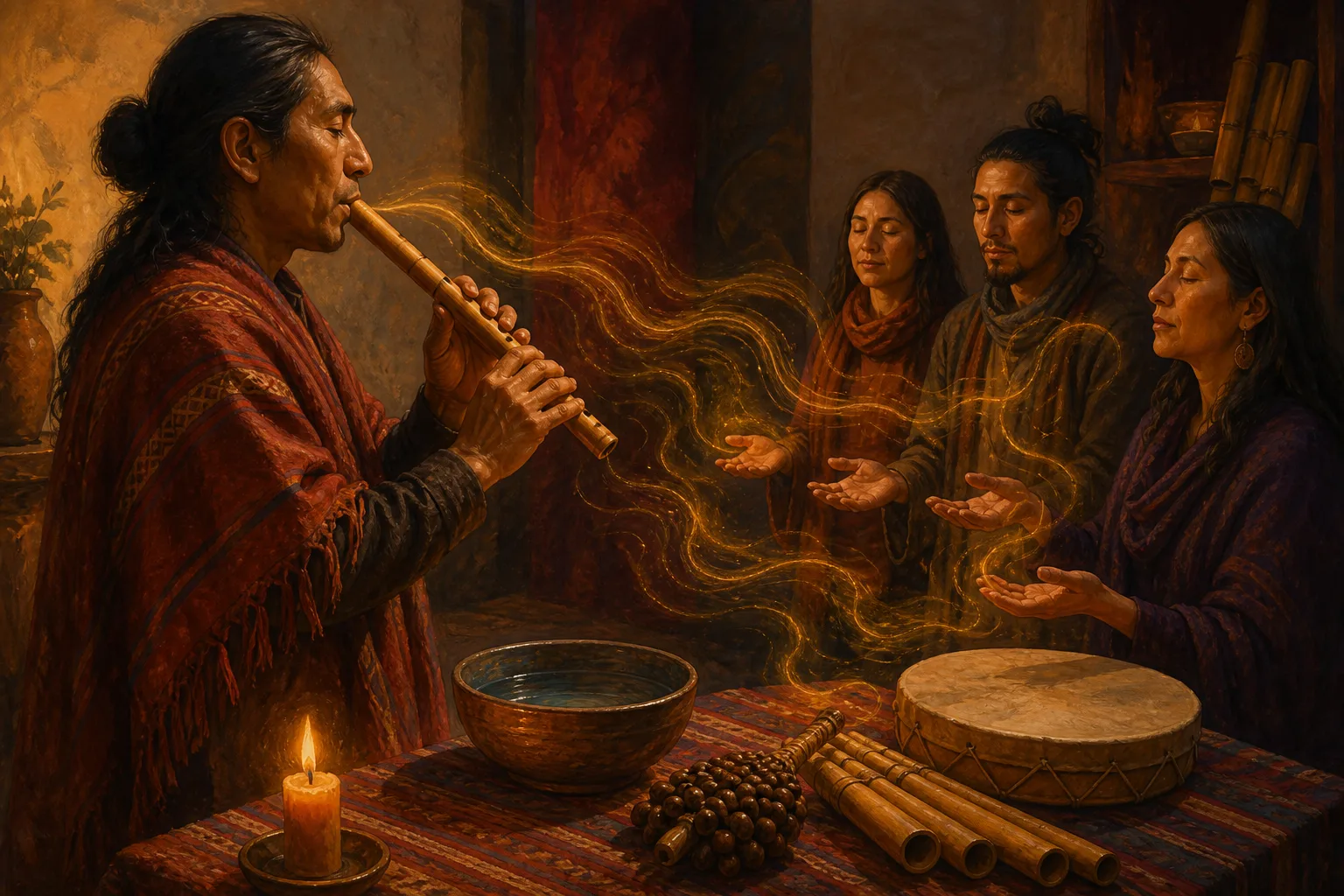
Robert uses the word healing to talk about relief, rest, connection and spiritual accompaniment. It does not present music as a substitute for a diagnosis or medical treatment. Its scope is different: helping a person slow down, pay attention to their breathing and find a less stuffy interior space.
Sometimes the result is a feeling of lightness; other times an emotion that was contained arises. It may also happen that someone simply enjoys the sound. There is no mandatory experience. Listening is an invitation, not a promise.
Listening is also participating
Robert's central idea is simple: music can bring you closer. For it to do so, it is not enough for someone to touch; someone needs to listen. Listening carefully is a form of participation and, sometimes, a way of caring.
Perhaps that is why a melody can accompany both a party and a difficult moment. It doesn't eliminate the complexity of the world, but it creates an interval in which we once again perceive ourselves as part of something larger: a room, a community, a tradition, or simply a circle of people breathing at the same time.
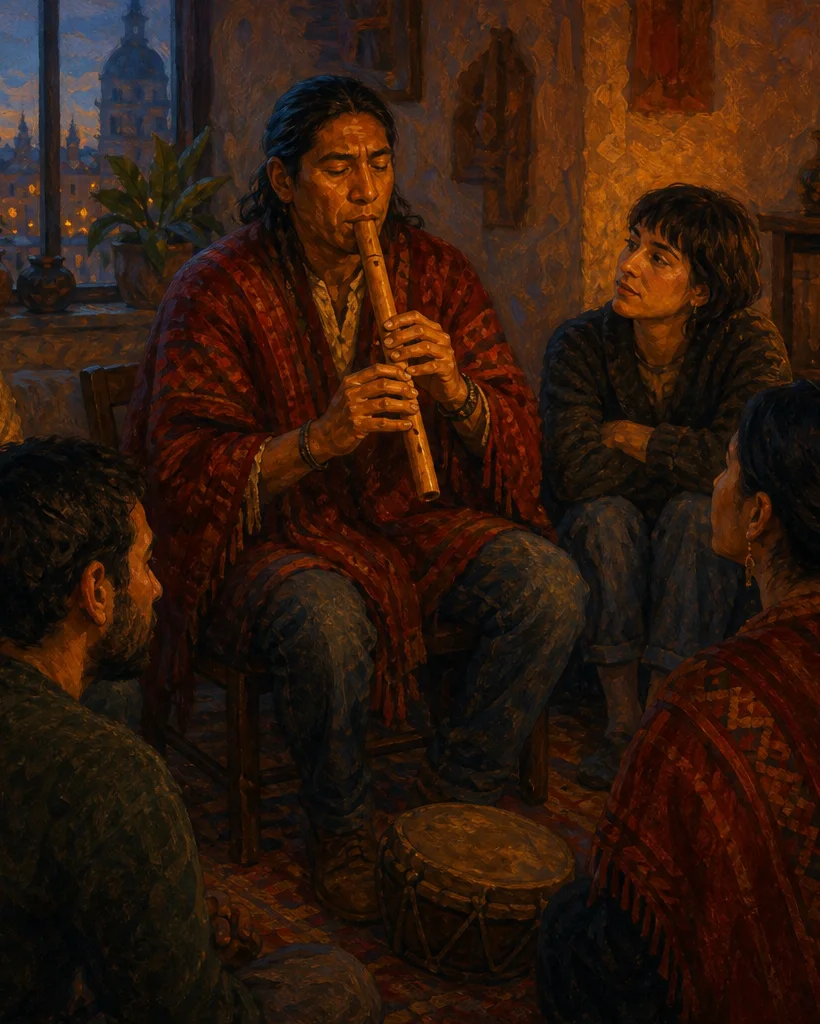
Robert Mamani
Peruvian musician, performer and teacher of Andean instruments, creator of the Hawk Spirit project.