Before the concerts, the trips and the classes, there was a child who listened to the folklore groups of Peru. A panpipe given to him by his father turned that fascination into practice, patience and, over the years, a way of life.
A country full of sounds
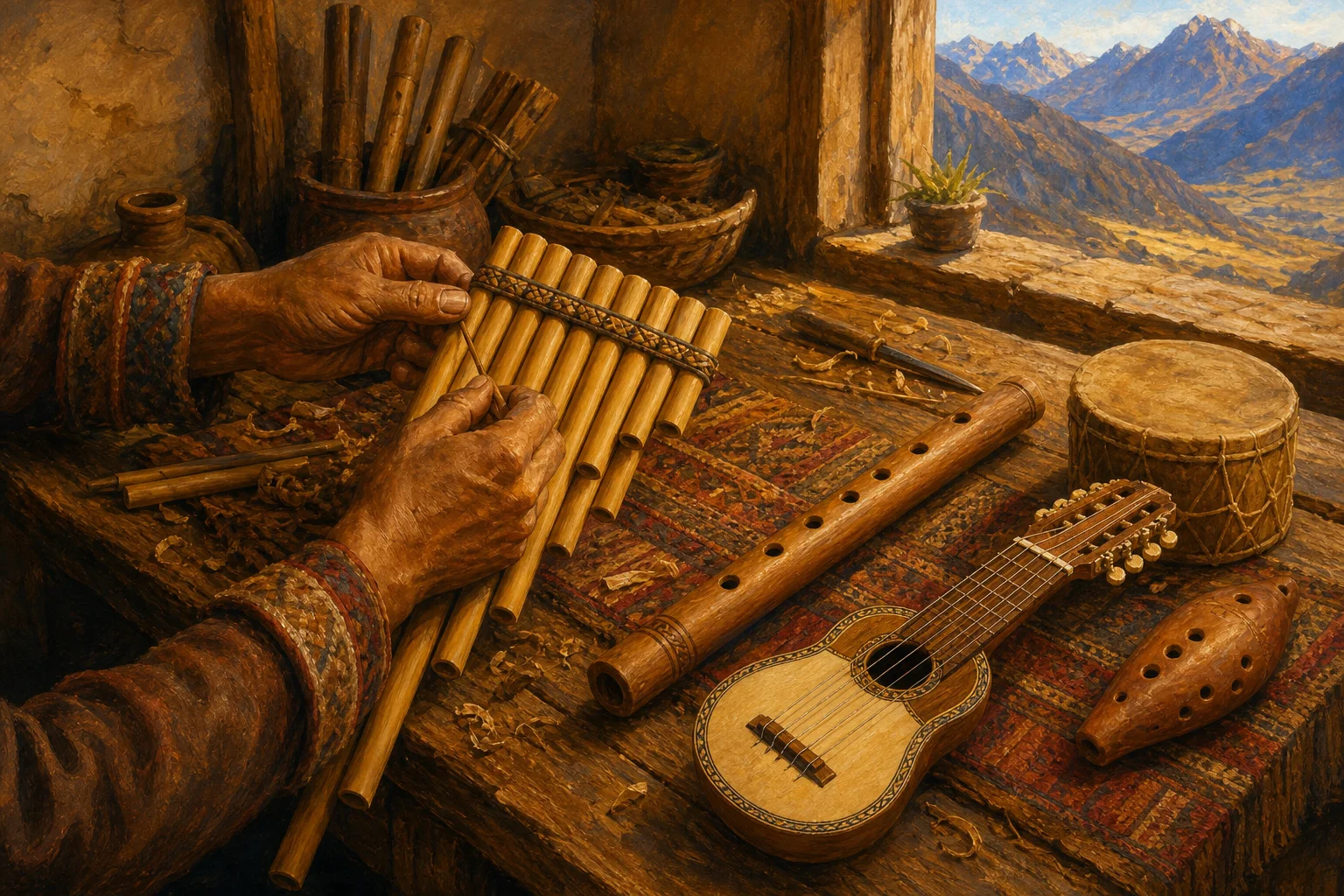
When Robert was a child, folk music was present in his environment. I listened to zampoñas, quenas, charangos, bass drums and guitars; I saw professional ensembles and discovered that a melody could contain landscape, memory and language. Peruvian music coexisted with Bolivian repertoires and songs in Aymara. To him, that world seemed immense.
He didn't yet know the names of all the techniques, but he recognized the effect they produced. The groups he listened to aroused a mixture of curiosity and admiration. I wanted to know how that sound was born and what had to be done to be part of it.
The first panpipe
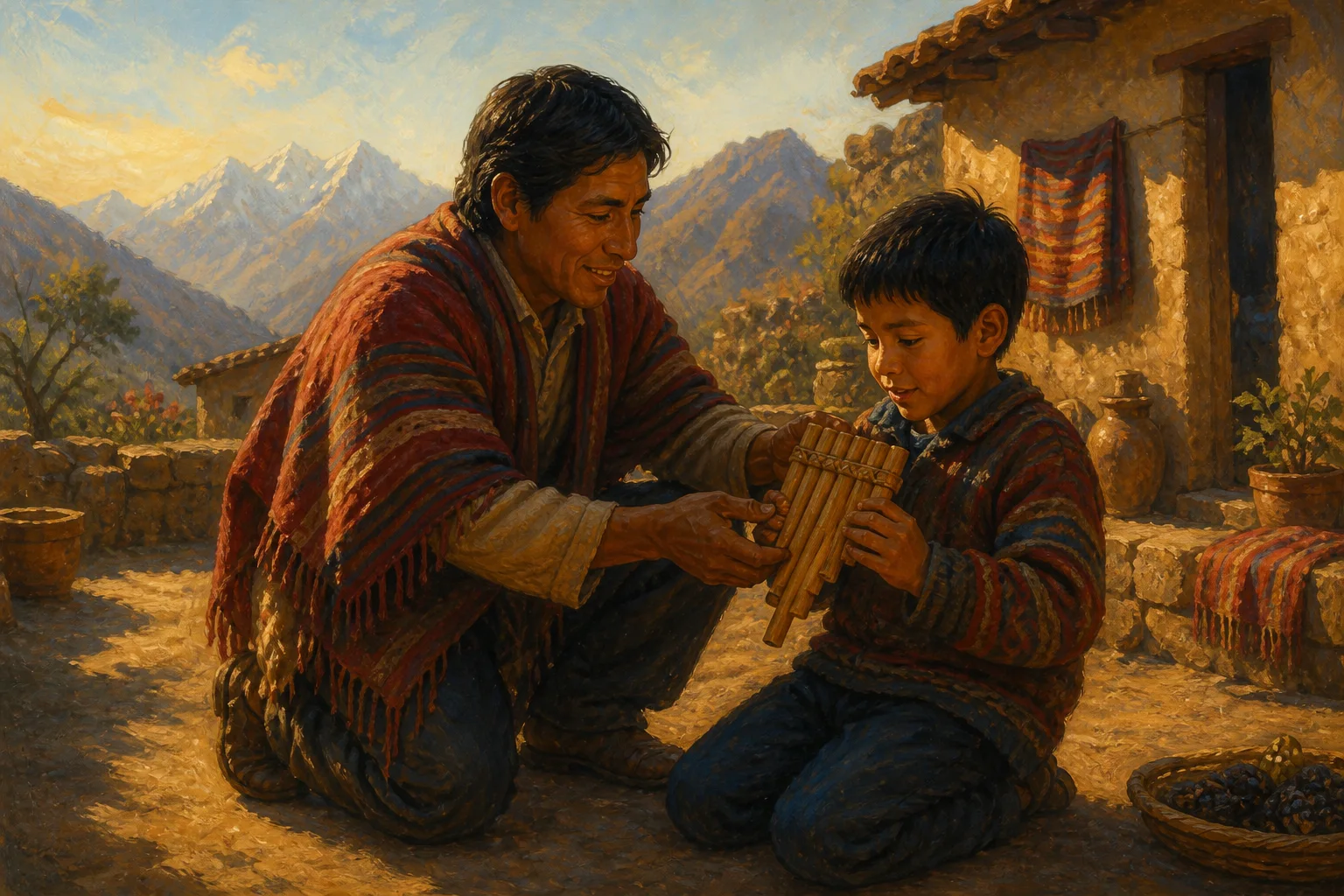
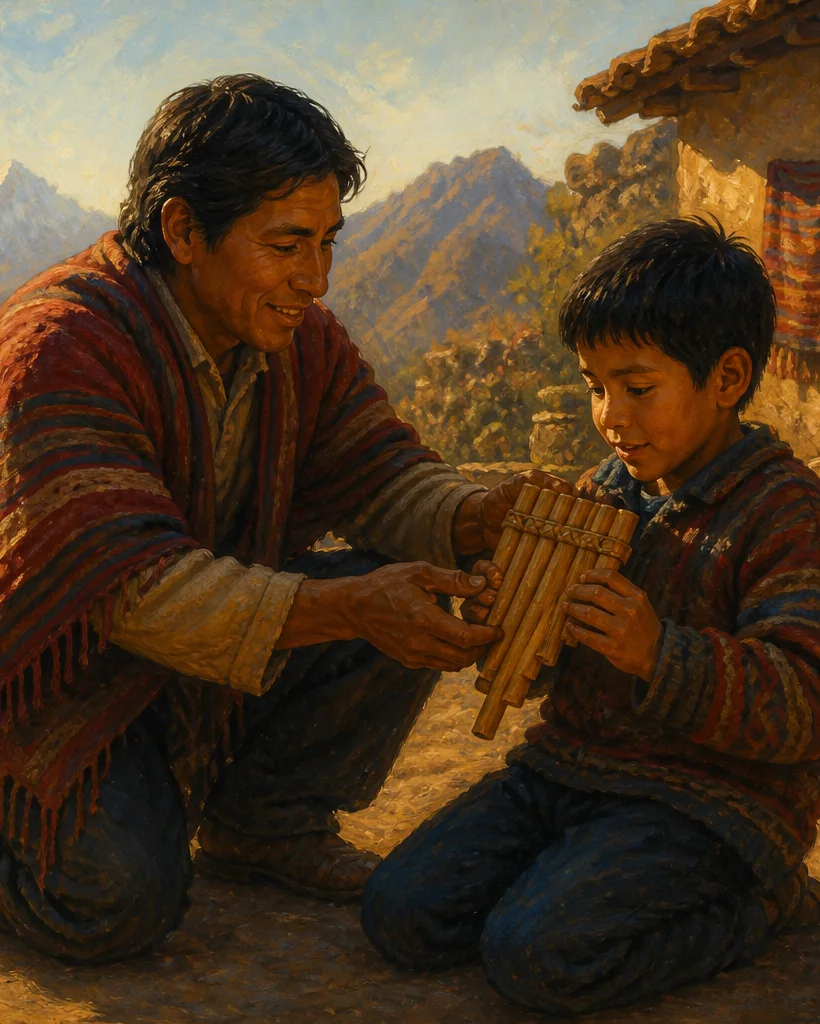
The decisive moment came around the age of eight, when his father gave him a panpipe. It was a small object compared to everything that would come later, but it opened a door. Robert began to taste, repeat and listen. Each new sound allowed him to enter a little more into that musical culture that until then he had contemplated from the outside.
“With that instrument I began to learn, to enter this world and to get to know it.”
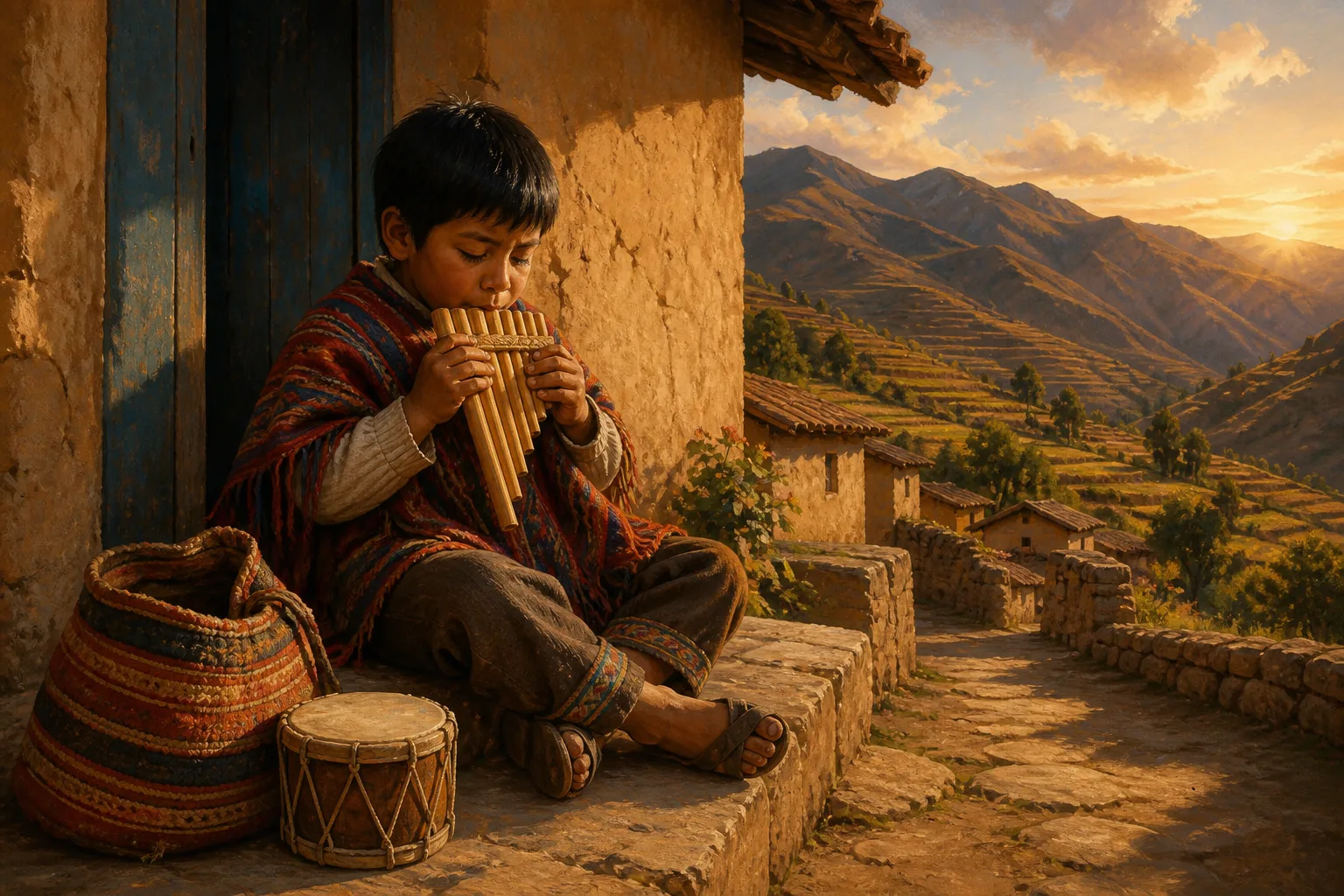
Learning did not mean following a step-by-step manual. Like many popular South American musicians, Robert developed hearing before musical reading. He would hear a phrase, look for his notes and try again. Memory, comparison and repetition were his tools.
Learning by ear is also learning with rigor
Being self-taught does not mean moving forward without discipline. It means building a method based on listening. You have to distinguish pitches, remember intervals, coordinate your breathing and recognize when a note is not yet clean. Robert insists that many musicians in the popular tradition are trained this way: by observing others, playing with friends and correcting themselves in practice.
In some cases, learning an instrument also responds to an economic need. Music allows you to work, accompany celebrations or play in the street. In others, it is born from the desire to represent one's own culture. Both reasons can coexist: the instrument feeds and, at the same time, preserves a story.
From one instrument to another
The zampoña was the beginning, not the limit. Robert was invited to a group as a percussionist and later came to play the drum and the panpipe in the same formation. Then the charango appeared. Each instrument required a different relationship with the body, but they all belonged to the same soundscape.
Curiosity gradually became a profession. He arrived at a casting without a direct invitation and was selected to join a professional ethnic group. Robert rejects that that moment was a coincidence: he understands it as the result of preparation, effort, faith and a path that was already prepared for him. He then traveled on tour to Germany, where working alongside experienced musicians showed him another level of demand: schedules, repertoire, coexistence, stage responsibility and the need to maintain quality every night.
What the road teaches
Robert does not describe his career as a series of lucky breaks. For him, what seems like fortune from the outside is usually found with many prior hours of work. Nor does he call difficult moments failure. Even conflicts, tiredness or a stage of exhaustion can show that it is necessary to change pace and continue in a different way.
His recommendation to those who are starting out is less romantic and more useful: patience, love for the instrument and constant practice. He himself tries to dedicate time daily to playing. Inspiration matters, but it needs a trained body to express itself.
A story that continues in the classes
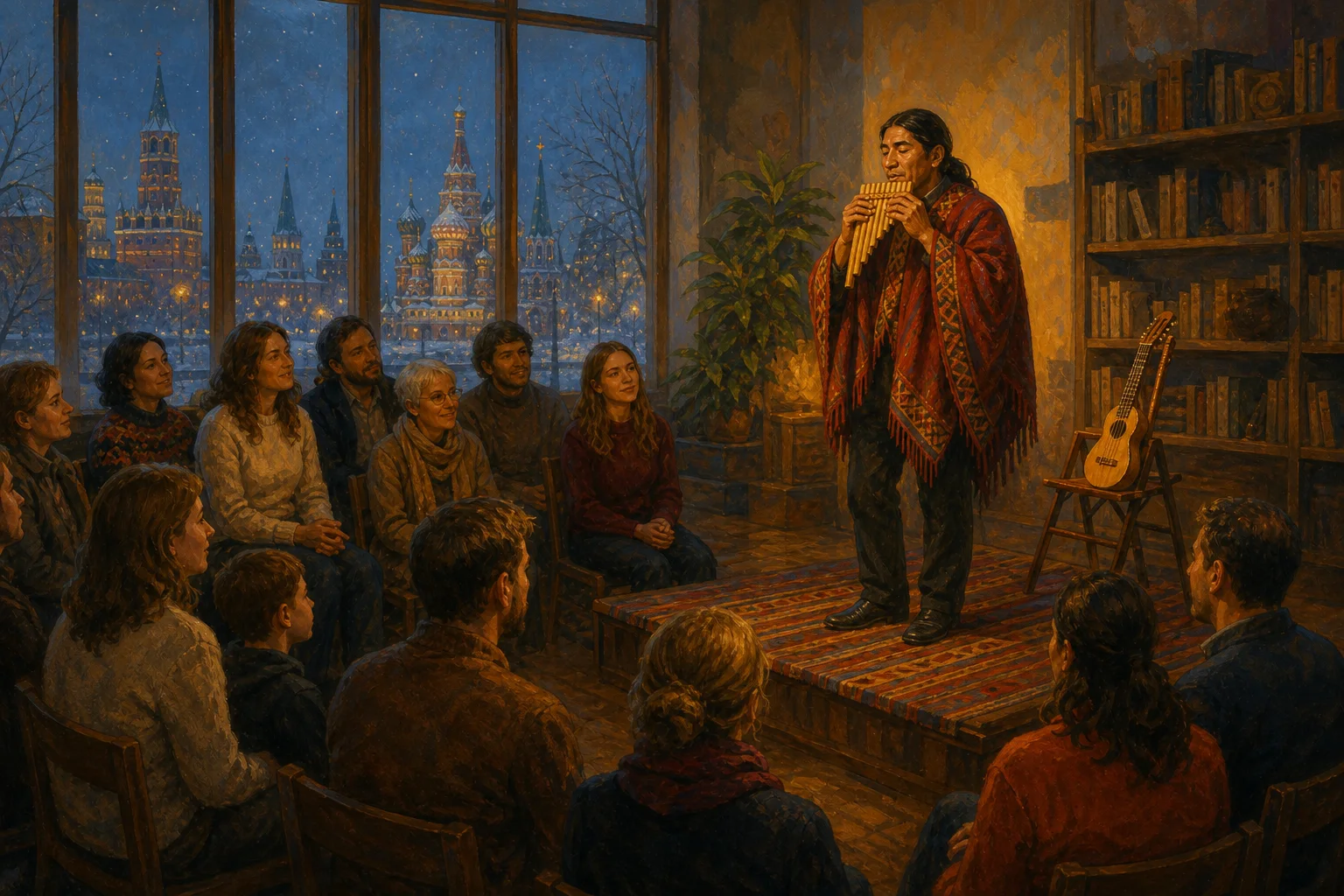
When Robert teaches a person who has never held a quena or a panpipe, he recognizes something about that child who was searching for the first sound. That's why a class is not just technical transmission. It is also the possibility of bringing a tradition closer to someone who was born very far from the Andes.
The first note is rarely perfect. The important thing is that it is true: a sound produced by one's own breathing, listened to carefully and converted into the beginning of a path.
Robert Mamani
Peruvian musician, performer and teacher of Andean instruments, creator of the Hawk Spirit project.