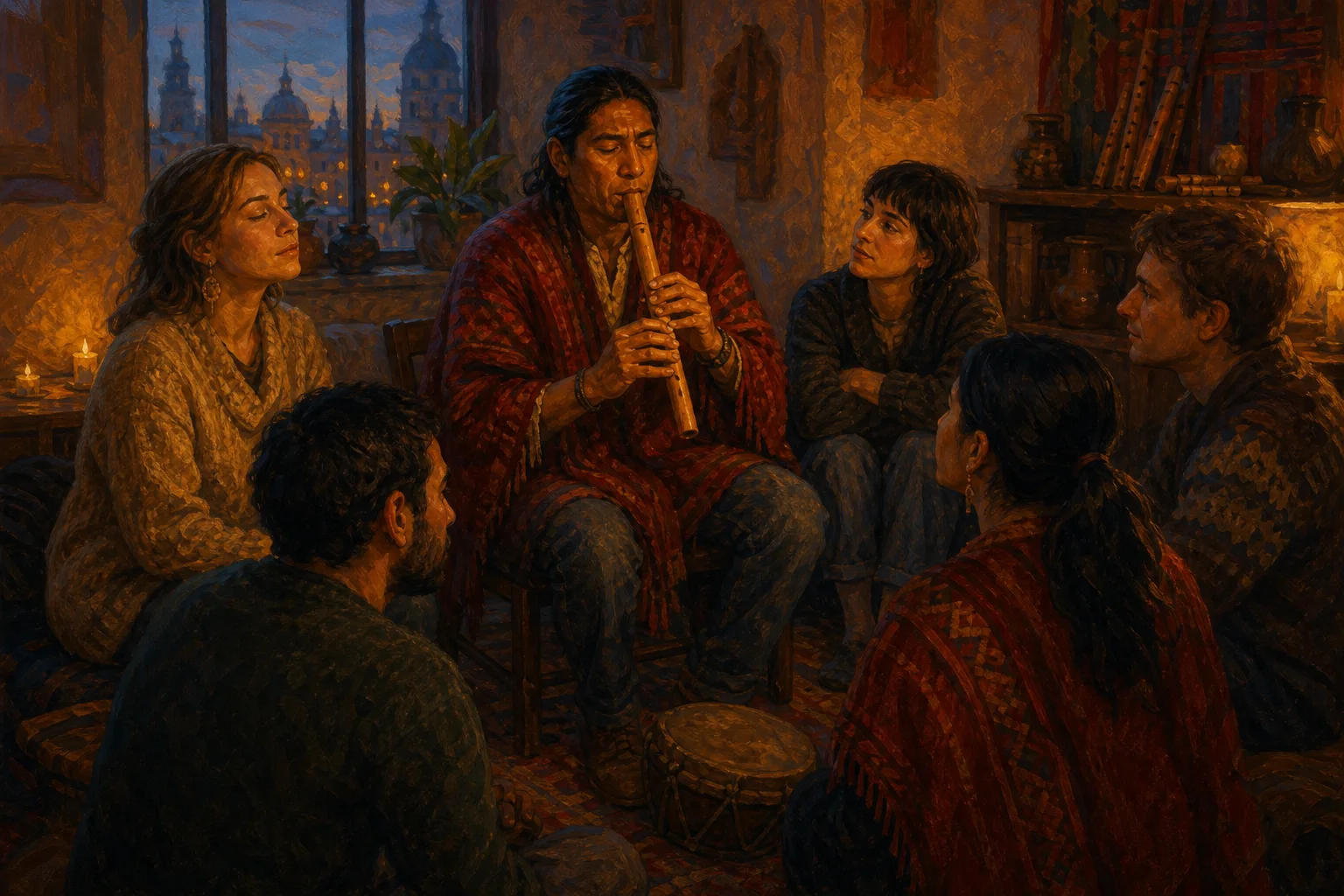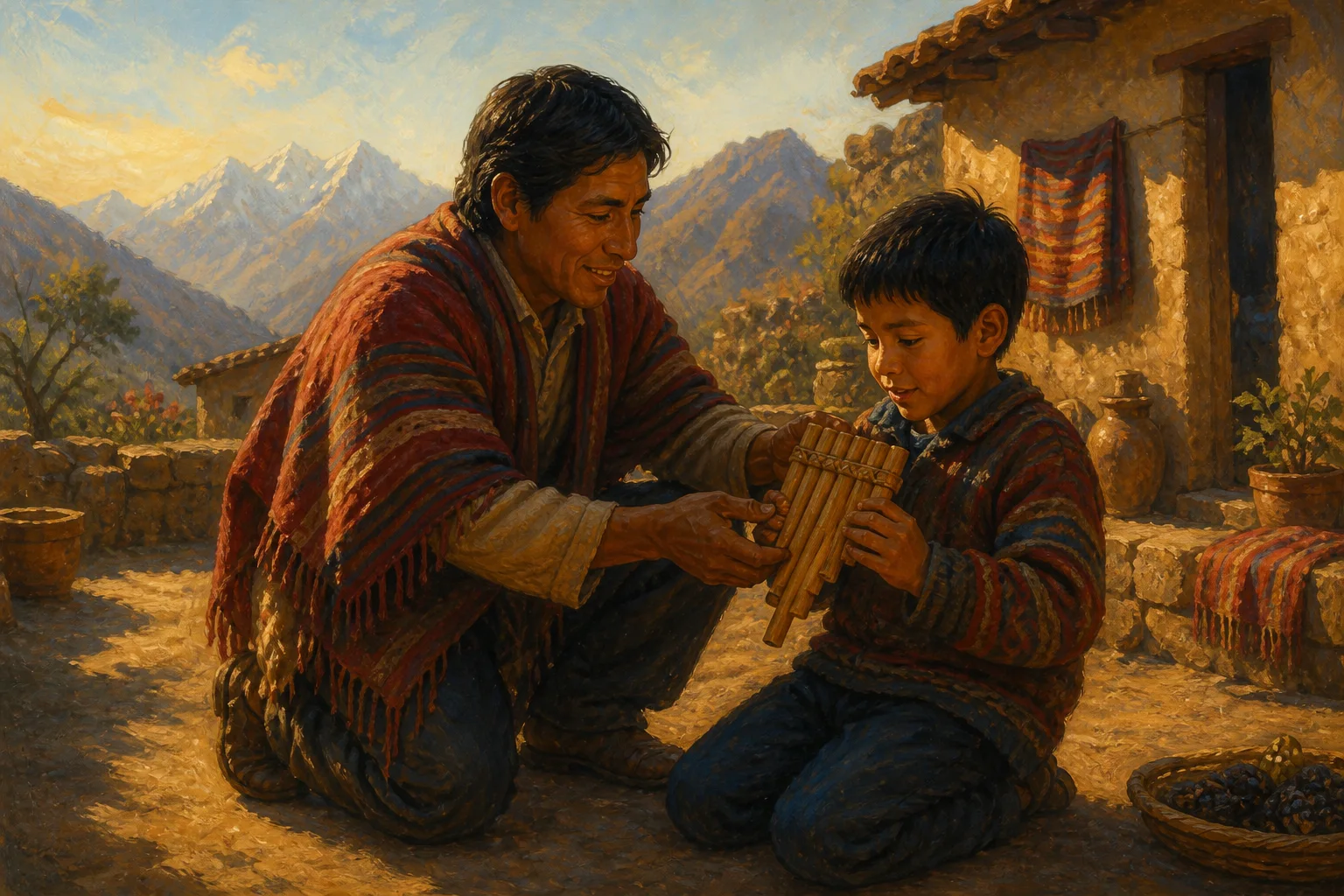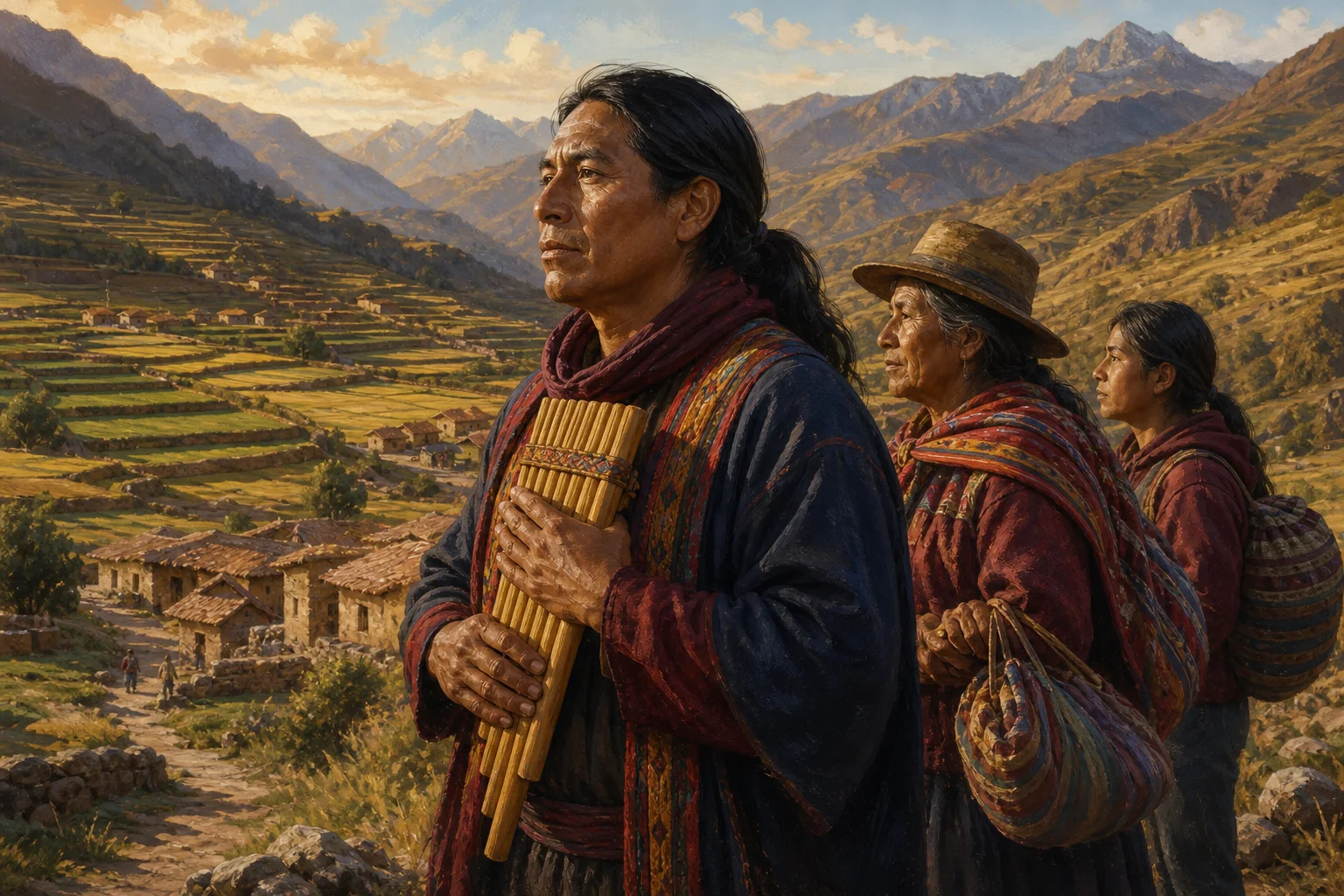
I carry with me deep Peru: the memory of my ancestors, their songs and an indigenous identity that for me unites the peoples of all of America.
From the love of the profession and representation
As a child I made music for the love of art and the pride of showing what I could do. Over time I understood that music could also be work, a decent way to receive a salary and survive. The love of music grew along with the love of work.
Outside of Peru I understood something else: music allows us to represent one's own authenticity as an indigenous person of Peru and South America. By playing these instruments I show part of the musical culture of my country and become a musical ambassador. The initial love transforms into a stronger commitment to the country, the culture and the music of the ancestors.
That music talks about love, crops, life, the spiritual and even death. Taking it outside the borders is representing my identity in the world.
What deep Peru means to me
To talk about deep Peru is to talk about my ancestors, its music, history and everything that made us grow and enrich ourselves culturally. It means remembering our roots and bringing with us what they created so we don't forget it. The deep Peru lives and manifests itself in each person; As a musician, I carry it with me.
Our ancestors left a huge heritage. All people, without excluding anyone—in South America, Central America, North America, Europe or Asia—have ancestors and a culture received as a legacy. The songs talk about cultivation, time, rain, love, sorrow and joy. Those feelings and stories were captured in our musical styles and make us remember roots that we carry deep inside.
An indigenous identity from all of America
When people ask me where I'm from, I honestly answer that I'm from Peru. But I consider myself an indigenous representative of all the peoples of America, from Canada to Chile, from North America to South America.
For me, the indigenous people are of one blood. The towns remained in the north, the center and the south and adapted to the reality of each ecological system. That is why I do not find a difference that breaks that unity: I am from Peru and, at the same time, a representative of the indigenous peoples of America.
My vision of current Peruvian music
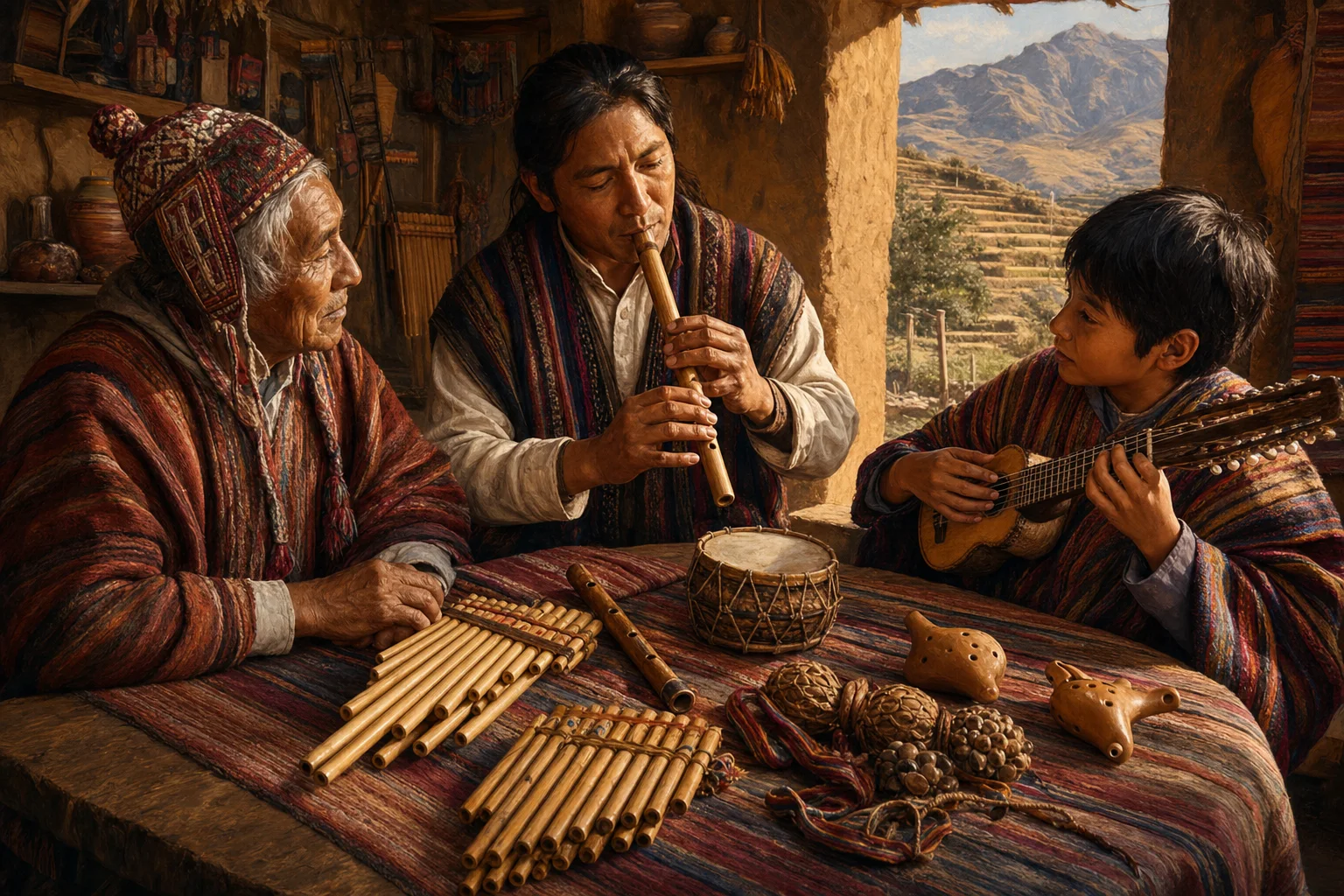
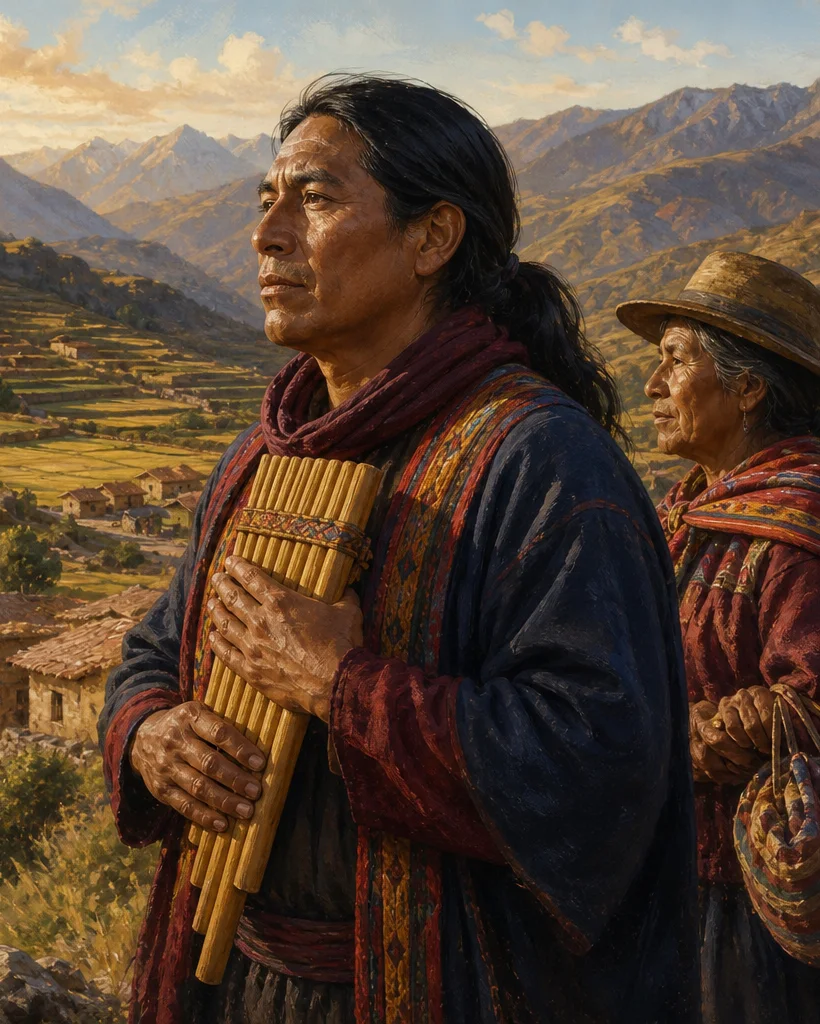
Peruvian national music has changed. Before, folkloric and traditional things predominated; Today there are many innovations and rhythms. Traditional music uses charangos, quenas, panpipes, drums and guitar. Creole music and the waltz are also called Peruvian, but personally I do not completely share that idea: I recognize the Spanish influence that dominated Latin America for many years, but I do not really consider it our music.
Outside the country we also perform new music with traditional instruments. Bass, drums and synthesizers appear. That's not a bad thing: it's a part of musical growth and a different creation. At the same time, I try to preserve the folkloric essence so that modern music does not lose its link with the original music.
Robert Mamani
Peruvian musician, performer and teacher of Andean instruments, creator of the Hawk Spirit project.