
Sound and breathing
Air is directed to the edge of each tube. Stability comes from a relaxed posture and small, precise movements.

Siku and zampoña are names that intersect in different contexts of the Andes. To choose, listen or learn, it is not enough to look at the form: the number of rows, the register, the tuning and the specific instrument matter.
Explore the formatPanpipes can vary greatly in length, register and construction. Robert needs to see the actual instrument before recommending exercises, confirming a tuning or assessing whether it is suitable to begin with.
Air is directed to the edge of each tube. Stability comes from a relaxed posture and small, precise movements.
The arrangement of the tubes and their length change the range, physical feel, and function of the instrument within the music.
To learn, it is advisable to check size, tuning, tube quality and comfort before purchasing based on a photograph.
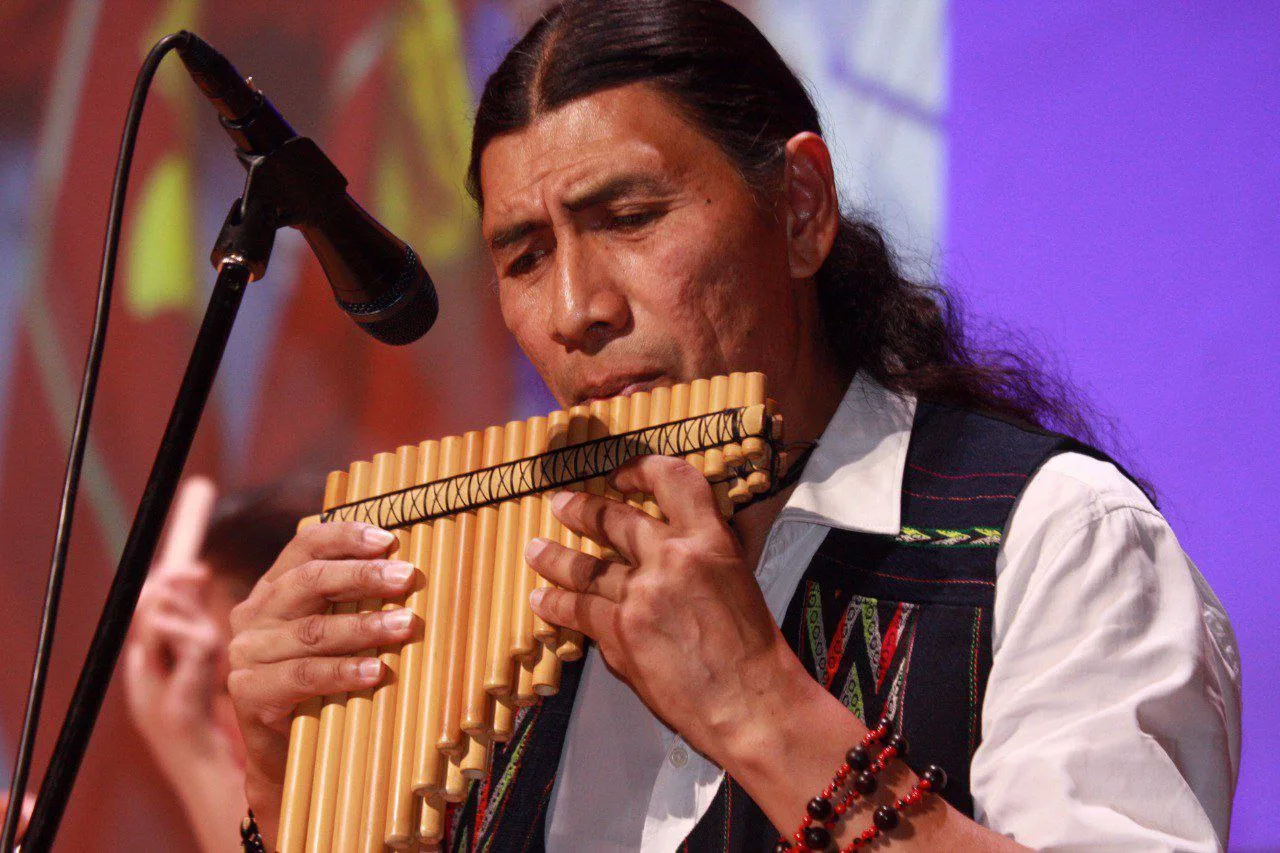
Before a melody, the direction of the air, the duration of the note and the clean passage from one tube to another appear. In classes Robert works with the student's panpipe and adapts the beginning to his construction and experience.

In shared practice one phrase finds an answer in another. Listening and common breathing are as important as speed.
Recognize his register, his disposition and the way he responds to the air.
See size, tuning, number of rows, condition of the tubes and comfort in the hands.
Learn with Robert, learn more instruments or consult an individual search in Peru.
Work on sound, transitions, articulation, rhythm, melody and joint listening.
They are related terms and are sometimes used as equivalents, but the specific use depends on the region, tradition and construction. It is advisable to identify the real instrument.
Yes, when the camera allows you to see posture and movement, and the microphone transmits sound without excessive processing.
There is no universal answer. Robert recommends checking the size, register, tuning and quality before ordering.
The siku and zampoña classes page explains the technical work, the format in Moscow or online, and how to send a query.
If you already have a panpipe, you can send a photo and describe your goal. If you don't have it yet, check before buying.